


Imagine a disciple making model so simple a teenager could lead it in a school cafeteria, a new believer could start it in a living room, a prisoner could lead it in his prison unit, and a recovering addict could reproduce it in a halfway house—with no staff, no budget, and no special training.
If your model can’t do that, it may be good ministry—but it’s not multiplication. If it isn’t reproducible by teenagers and new believers, it’s not disciple making; it’s a dependency factory.
Jesus never asked his disciples to master theology before they could make disciples. He sent them out while they were still learning. He taught them through doing, not just hearing. And when he commanded them to make disciples of all nations, he expected them to pass on what they’d received—immediately, simply, and practically.
The early church understood this. They didn’t require seminary degrees or a complex curriculum. New believers turned around and made disciples. Ordinary people—fishermen, tax collectors, former prostitutes—reproduced what they’d learned because the model was simple enough to pass on.
Somewhere along the way, we made it complicated.
We turned disciple making into programs requiring trained professionals. We created systems so complex that only the educated could navigate them. We made disciple making a class to attend instead of a life to imitate.
And then we wondered why multiplication stopped.
Level 5 churches have recovered something the early church never lost: the power of simplicity.
“Level 5 churches have recovered something the early church never lost: the power of simplicity.”
They’ve stripped their model down to its biblical core—Scripture, relationships, obedience, and reproduction. Most models fit on a single page. A new believer can learn them in weeks and teach them immediately. Teenagers lead them. Recovering addicts lead them. People with no formal training lead them—because the power is in the model itself, not the personality of the leader.
Complexity may impress, but simplicity spreads.
When obedience is the goal and reproduction is the design, multiplication becomes inevitable.
The Simplicity That Multiplies
Jesus never told his followers to make converts or fill classrooms. He told them to teach people to obey everything he commanded. That single word—obey—marks the difference between disciples who consume information and disciples who change the world.
In Level 5 churches, obedience isn’t a nice outcome; it’s the operating system. These leaders have discovered that transformation doesn’t require complexity. It requires clarity and follow-through. When people practice what they learn—immediately, simply, and together—the Word becomes flesh again in every neighborhood, workplace, and friendship.
Obedience-based disciple making reverses the modern pattern. Instead of asking people to understand before they act, it invites them to act and let understanding follow. Each believer learns a simple rhythm, and anyone—student, parent, retiree, or new believer—can join the mission because the model fits in their hands.
Churches multiplying disciples share this key trait: they make obedience easy to imitate. Their methods—whether an eight-week seeker course, a daily PBJ (Prayer-Bible-Journal) rhythm, or a simple Bible-reading pattern—translate the Great Commission into simple steps that ordinary people can take today.
As the following story shows, obedience is the seed of multiplication. When God’s people move from only hearing the Word to actually doing it, movements grow—quietly, locally, and exponentially.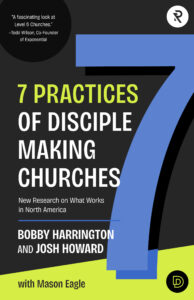
“Obedience is the seed of multiplication.”
From North Carolina to Sweden: Miriam’s Story
When Doug Burrier began Sustainable Discipleship at Three Taverns Church, he had no expectation it would spread beyond his own community. But what started in Georgia as a small obedience-based model has since multiplied to other states and even other countries.
Doug’s process is deliberately simple. A group of people read Scripture during the week, highlight what stands out, and then meet to discuss what they heard and how they’ll obey it. No sermons, lectures, or professional leaders—just shared discovery and accountability among ordinary believers.
Doug’s process focuses on helping people hear from God, not just on teaching content. The key question is always: What are you going to do about what you just heard?
Read. Highlight. Obey. Share.
One of the clearest examples of how reproducible this model can be came from a woman named Miriam in North Carolina. Doug told the story of how she ordered his discipleship resource online, gathered a few friends, and began following the pattern. None were trained leaders, but within weeks they began seeing transformation happen.
Among the group was a Swedish woman whose husband was in the US for a short-term work assignment. After returning home, she began sharing what she’d experienced in the States.
They translated the materials into Swedish and started their own groups.
From that single connection, new groups began multiplying across Sweden using the same rhythm: read, highlight, obey, share. Doug emphasized no recruitment or organizational structure was behind it—only obedience.
Again, the genius isn’t in the sophistication of the model. It’s in the accessibility.
“The genius isn’t in the sophistication of the model. It’s in the accessibility.”
A woman in North Carolina orders a book. She gathers friends. They read Scripture together and commit to obey it. One of them moves to Sweden. She does the same thing there. Groups multiply. Lives change. The gospel spreads.
No degrees required. No budgets needed. No organizational chart. Just ordinary believers reproducing what they received.
For Doug, this proves his core conviction: healthy disciples always reproduce. He believes when people genuinely hear from God and obey him, everything else—evangelism, service, and multiplication—naturally follows.
The model works in North Carolina and Sweden. It works in prison cells and college dorms and corporate boardrooms. It works because it’s simple enough for anyone to pass on.
And that simplicity isn’t weakness—it’s genius.
Excerpted from Bobby Harrington & Josh Howard, 7 Practices of Disciple Making Churches.
Read the rest of our teaching on disciple making, from the stages to the shifts a church has to make.