
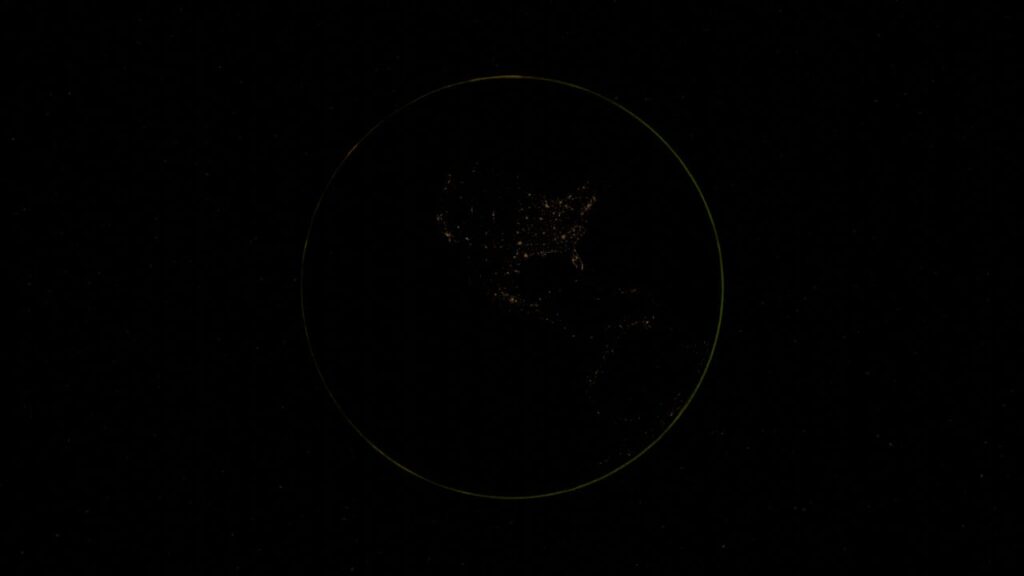


How would you answer the question, “Why does something exist rather than nothing?”
Here’s the answer we’ll explore:
“Everything (from ants to God) has an explanation for why it exists: things are either contingent or necessary. There must be something necessary that all contingent things depend upon. Since the universe is contingent, a necessary being like God is needed to explain it.”
Now, let’s walk through this answer . . .
“Everything (from ants to God) has an explanation for why it exists . . .”
Have you ever wondered why our physical universe exists instead of nothing at all? It’s a deep question—and an important one. Since we’re born into this world, we might take it for granted. You might think, “Of course this world exists. Of course we live in this universe. It’s all I’ve ever known.” But when you pause to think about it, there has to be an explanation for why the universe exists at all.
Let’s think about it this way. Imagine waking up one morning and finding on your bedroom floor a strange, glowing rug that you’ve never seen before. As you move around it, it changes color. When you step on it, you feel a sudden rush of wind, and everything in your room begins to float. You quickly jump off the rug, and everything returns to normal. Now, assuming you weren’t on any drugs, you’d no doubt have the thought: “What’s the explanation for this rug? How did it get here?” You certainly wouldn’t just accept that it’s there for no reason.
“You certainly wouldn’t just accept that it’s there for no reason.”
In everyday life, we instinctively look for explanations for everything. If you hear a strange noise at night, you’ll probably investigate where it came from. Whether we’re talking about a rug, an insect, a person, a sound, a planet, the entire universe, or God Himself, it’s completely reasonable to think that everything has an explanation. Surely, nothing exists for no reason at all.
“. . . things are either contingent or necessary . . .”
There are two explanations for why something exists. Everything that exists either depends on something else to exist (it’s contingent), or it exists because of its own nature and can’t fail to exist (it’s necessary). Let’s briefly explore each of these.
If something is contingent, it would not exist unless something else caused it to exist. Since it depends on something else, it might have never existed at all. For example, you are contingent because you depend on your parents for your existence. If your parents never existed, you wouldn’t be here. Contingent things are all around us. A tree exists because it grew from a seed produced by another tree. Your phone exists because of the materials and engineering that went into it. The painting on your wall, the chair you’re sitting on, and the clouds in the sky are all contingent. Even the earth itself is contingent, since it was formed through specific cosmic events.
On the other hand, if something is necessary, it must exist. It does not depend on anything else. While contingent things could have failed to exist or could cease to exist, a necessary being cannot fail to exist—no matter what. Its nature is to exist.
” . . . There must be something necessary that all contingent things depend upon . . . .”
Now, when you think about it, there’s no logical way that everything can be contingent. There can’t be an endless chain of things all depending on something else. We need a starting point for the chain—a foundation that doesn’t depend on anything else to exist. To help explain this, think about how small children often ask their parents “why.” Here’s an example:
Child: “Why is this tree in the forest?”
Parent: “Because a seed grew into a tree.”
Child: “Why did that seed grow into a tree?”
Parent: “Because it was planted in good soil with the right conditions.”
Child: “Why is there soil with the right conditions?”
Parent: “Because of the natural processes of the earth.”
Child: “Why does the earth exist with these processes?”
Parent: “Because it formed in just the right way in space.”
Child: “Why did the earth form in just the right way?”
Parent: “Because we live in a universe with just the right natural laws.”
Child: “Why does the universe exist?” . . .
“There can’t be an endless chain of things all depending on something else.”
Clearly, this chain of “why” questions can’t go on forever, with everything depending on something else. At some point, there has to be a first cause—the starting point of the chain. And this first cause must be necessary. If it were contingent, it would depend on something else and wouldn’t be the first cause. But can the universe itself be the necessary thing that starts the chain?
“. . . Since the universe is contingent . . .”
In the past, many atheists (people who don’t believe in God) considered the universe necessary and eternal. They thought nothing created the universe and that the universe was the first cause for all other things. According to this view, everything in the universe ultimately depends on the universe itself, but the universe just exists necessarily.
However, scientific evidence from the last century has shown that the universe began to exist. And if the universe began to exist, it cannot be necessary; it must have come from something else. This means the universe is contingent—it depends on something outside itself for its existence, something beyond the universe that caused it to begin.
“. . . a necessary being like God is needed to explain it.”
So, we’ve seen that, if everything around us is contingent, then something must be necessary—something that exists by its very nature and is the first uncaused cause. And this necessary being can’t be the universe itself; it must be something beyond the universe.
When we think about what this necessary being must be like, it sounds remarkably like the description of God in the Bible. Since the universe includes all space and matter and time, the necessary being that created the universe must be beyond space, matter, and time. It must be eternal and uncaused—the source of everything that exists. The Bible says God has these qualities. For example, Acts 17:24–25 tells us that God is independent—we all depend on him, and he doesn’t depend on us at all. And Colossians 1:15–17 says all created things came from God and are held together by him.
“Colossians 1:15–17 says all created things came from God and are held together by him.”
These qualities are exactly what we would expect from God. After all, it wouldn’t make sense for something to create God—because if something created him, that being would be God. A “created god” isn’t worthy of the name “God” at all. So not only does the Bible teach that God is uncreated and self-sufficient, but we’ve also seen that this idea makes sense: something beyond the universe, with the very qualities the Bible attributes to God, must be the first uncaused cause of everything else.