



The following is an excerpt from Josh Branham’s book What Are You Waiting For?: A Young Leader’s Guide to Changing the World, from his chapter on Fight.
Everything fell apart at mile 20. I experienced all the typical side effects of running a marathon—heartbeat racing, accelerated breathing, legs on fire. You know, the fun stuff. Then all of a sudden, CRACK!
“How are you doing?” my brother asked.
“My foot hurts,” I gasped between breaths.
“This is a marathon. Everything hurts,” Andrew responded.
Andrew is my older brother. He had two marathons under his belt compared to my zero. I didn’t need his sarcasm. The race was called “Haulin’ Aspen” (pun intended) in Bend, Oregon. The course took us through the scenic Deschutes National Forest. The stunning views of pine trees and Mount Bachelor almost made the pain bearable. Almost.
After three hours, we were hitting the wall. The wall is a phenomenon experienced by many endurance athletes. It’s when you run out of energy because you’re out of glycogen. It feels like you are dying. Runners often say the halfway point in a marathon is mile 20. The idea is that the last 6.2 miles are just as hard as the first 20. I disagree. The last 6.2 are way worse.
I had never run more than 20 miles before that day. I didn’t know what would happen exactly. Could I push past the wall? Would I make it to the finish line? How much would I slow down? Every step was uncharted territory. One thing was sure: it would be painful.
“After three hours, we were hitting the wall.”
The pain in my right foot was different. I had broken it. I could tell it was a stress fracture because I had done the same thing to my left foot back in high school. A stress fracture is an overuse injury caused by repetitive force. Although the crack is tiny, it generates shots of searing pain with every step. Unfortunately, the terrain was much more technical than I expected. Lava rock completely covered some sections of the trail. I foolishly chose to wear my lightweight road shoes instead of my slightly heavier but sturdy trail shoes. Only six miles to go.
“I think I broke my foot,” I said.
“Really? Can you make it to the finish line?” Andrew asked.
“I don’t know,” I confessed.
I honestly didn’t know if I could finish the race. One day, you will find yourself in this type of situation. You may not be in a literal race, but things will fall apart. Maybe you are dealing with this right now. Maybe you are in the middle of a college degree, and the homework is way more challenging than you thought it would be. Maybe you are a few years into a serious relationship, and now all you do is fight with each other. Maybe you are starting a new job, and the learning curve is entirely overwhelming. When things fall apart, you must face the question: Can you make it to the finish line?
“When things fall apart, you must face the question: Can you make it to the finish line?”
If you want to change the world, you’re going to face opposition. Leaders are catalysts for change, and change always creates resistance. Sometimes resistance is embodied in the form of a real human opponent. For whatever reason, someone doesn’t want you to win. They could be your competition, they might be jealous, or frankly, they don’t like you. These people are resistance incarnate.
Other times, resistance takes the form of unforeseen obstacles. A random email complaint that shows up at just the wrong time. A homework assignment which has a back page you didn’t see. The materials cost twice as much as your budget. Every project has setbacks, and every hero has a villain. Often, we face a combination of the two.
When resistance comes, what do you do? There are three main options:
First, run away. 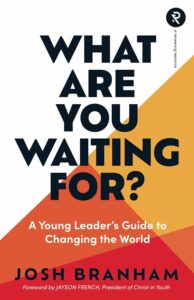
Avoidance is the most common approach. People generally try to avoid pain, and resistance is painful. There are a lot of different ways to run.
You get a critical email, so you forward it to another team member to respond: #delegation.
A project is close to the deadline, and you won’t finish in time. Instead of buckling down and getting things done, you turn in the project late and blame external circumstances.
A co-worker asks you to help them resolve a conflict. You say you’ll pray for them and send them on their way.
Whether we pass the problem off, blame shift, or ignore it, none of these tactics help. You can’t solve a problem while you are running from it.
“You can’t solve a problem while you are running from it.”
Second, give up.
Sometimes we surrender. We’re tired, so we give way to the resistance. If you can’t beat ‘em, join ‘em.
You know the person in the meeting is wrong, but they are louder than you are. So, you don’t argue. You go with their idea even though you know it’s a bad one.
You face a brutal financial quarter and decide to close up shop.
The education required for your dream career is too challenging/long/expensive, so you go with something more manageable.
Change is not only hard on people; it is hard on the leader. It’s always going to be easier to give up, but the best things are always on the other side of difficulty. That’s why they call it a breakthrough.
Third, fight.
There is a third option: we can fight. I’m not talking about getting aggressive. I’m talking about getting resilient. It’s more about how many punches you can take than how many you can throw. To fight is to take an honest look at what needs to be done and get to work. Own the critical feedback, deal with the conflict, and speak up. Put in the hours. Stay up late if you have to. Fighting means doing what needs to get done. Leaders who do this aren’t overly optimistic about the situation. They know it’s going to be hard, but they show up anyway. Yard by yard, they move the ball down the field.
“Yard by yard, they move the ball down the field.”
Fight is the ability to keep moving forward regardless of what obstacles come your way. Fight is sailing into a headwind. It’s showing up early and staying late. Falling down seven times, getting up eight. You don’t have to be intelligent, talented, or even strong to fight. Fight is simple: keep moving forward.
Excerpted from Josh Branham, What Are You Waiting For? A Young Leader’s Guide to Changing the World.