



“Lord Jesus, I take hands off as far as my life is concerned. I put Thee on the throne in my heart. Change, cleanse, use me as Thou shalt choose. I take the full power of Thy Holy Spirit. I thank Thee.“ —from an entry in Borden’s journal
The life of William Borden (Borden of Yale) might be one of the greatest stories that can be used to inspire the next generation to impact the world for Christ. His biographer said it this way:
“It is probably true, as was stated in the Princeton Seminary Bulletin, that no young man of his age had ever given more to the service of God and humanity; for Borden not only gave his wealth, but also himself, in a way so joyous and natural that it was manifestly a privilege rather than a sacrifice.” —Mrs. Howard Taylor, Borden of Yale: The Life and Legacy of William Borden
While it might be easy to look at Borden’s wealth and believe that if we were dealt the same cards, we could be equally generous and make a similar impact for the Kingdom of Heaven, we have to realize that a life like Borden’s isn’t measured in its length or possessions but rather its character and devotion.
Borden’s Younger Years
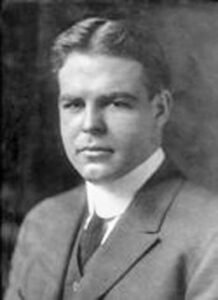
Borden grew up in a wealthy household in Chicago due to his father’s silver mining operation in Colorado. He was vastly influenced by his mother’s Christian faith as she worked to teach her children the way of Jesus. His family wealth did not diminish his character. He grew up with a desire to work hard and to help where he could, and from a young age developed a passion for reading God’s Word. Early on in his time going to church with his mother, Borden’s passion for Jesus began to grow. Here is an example of his dedication to serving God in his younger years:
“One Sunday at the Chicago Avenue Church (which later became Moody Church), Dr. R. A. Torrey challenged believers to surrender their lives in total consecration to Jesus Christ. Many stood to their feet, among them a seven-year-old lad in a sailor-suit. No doubt some of the adults near him smiled at his action, but the boy was deadly serious. In fact, that step of dedication controlled his life until, eighteen short years later, he died in Egypt, preparing to go to China as a missionary.” —Warren Wiersbe, 50 People Every Christian Should Know
“His family wealth did not diminish his character.”
Please don’t get the idea that Borden was just simply better than other young people, and that that’s what led to this devotion. I would argue that today this kind of devotion among the next generation is possible even in the midst of the many distractions that are available for kids. He wasn’t necessarily wired differently. He wasn’t exempt from worldly behavior. For example, there are letters written from him to his family while he was away at the Hill School as a high school student, where he admitted that when he saw other students receiving letters from family and he had no letters, he wanted to hit the mailman. He had hurts, frustrations, and insecurities just like anyone else—yet he lived a life daily dedicated to God.
After High School
After Borden graduated from the Hill School, his parents gifted him with a trip around the world guided by Walter Erdman, a Princeton University and Seminary graduate. They traveled on a ship called the S.S. Korea to Japan and China. As he recounted in his letters home, he was struck by the brokenness of their religious beliefs and practices, which would impact his later decision to travel to China as a missionary to Muslims.
He returned home and committed to studying at Yale and Princeton Seminary. He began to work at sharing the gospel with his classmates and started a few Bible studies that he kept up with throughout his time in school. Early on in these endeavors, he expressed many doubts and struggles in trying to share his faith with his classmates. He found that it didn’t come naturally to him at first.
In the meantime, Borden started the Yale Hope Mission, which was a ministry for the homeless and poor in the area. His family, after taking stock of his affairs, discovered that he had given over $70,000 to different local Christian ministries during his three years at Princeton. His impact went beyond monetary support. He worked at sharing the gospel with whomever he could, he offered to pray with whoever needed it (often on the spot), and he worked hard serving whoever was in need.
“He worked at sharing the gospel with whomever he could, he offered to pray with whoever needed it (often on the spot), and he worked hard serving whoever was in need.”
As he neared graduation, Borden began to take on more leadership responsibilities in his volunteer positions, one example of which was becoming one of the directors of the National Bible Institute. During one of these leadership roles as a delegate to the Student Volunteer Movement conference, he was enraptured by one speaker who shared about the grip that the Muslim faith had on the people of China. It was at that point that he decided where he wanted to serve. Borden was going to China.
One news clipping written about his decision to deny his fortune and become a missionary said this:
“William Whiting Borden, an American youth who is heir to $5,000,000, is to become a missionary to China. A majority of persons who read the announcement will be surprised. It is the popular impression that China gets, as missionaries from America, young men and women who lack other opportunities, and that to become a missionary to China is to agree to be buried in a heathen and ‘uncivilized’ country.”
Borden, after his graduation, was ordained and then traveled to Egypt, where he was preparing to learn both Chinese and Arabic to better equip himself for his ministry in China. It was during his studies in Egypt that he contracted cerebral meningitis and died shortly after.
Memorials were held at many different schools and churches to remember the broad reach and deep impact of William Borden. He left almost the entirety of his inheritance, $1 million (which would be about $30 million today), to the different ministries he had supported in his life: China Inland Mission, National Bible Institute, Moody Bible Institute, and so many more.
“It was during his studies in Egypt that he contracted cerebral meningitis and died shortly after.”
While it might be easy to believe that Borden’s early death caused his impact to be lessened, the opposite is true. His friends and colleagues began to compile and share teachings that Borden had written, as well as writing accounts of his life of devotion to Jesus. Some 35,000 copies of accounts of his life were written in Arabic and handed out to many Muslims, and it opened doors for other missionaries to share the gospel. Even in his death, Borden testified to the goodness of God.
What can we learn from William Borden?
Was William Borden a millionaire? Yes, but that would not be the first thing his friends, acquaintances, and colleagues would say about him. What they did describe were his genuine concern and love for those he encountered, his playful nature, and above all, his devotion to Scripture and prayer.
His biographer stated it this way:
“Borden’s life counted because it was rooted in Christ, fed daily upon His Word, was subject to His Spirit, breathed the atmosphere of prayer, and was poured out for others.” — Geraldine Guinness Taylor
From an early age, Borden fostered a deep love and commitment to Jesus through a regular practice of prayer and Scripture. He wasn’t afraid to ask questions and discuss spiritual things with whomever he was with. A quote that deeply shaped his heart for God was from D. L. Moody:
“The world has yet to see what God can do with a fully consecrated man.” 
William’s reflection on this quote brought him to the understanding that this “fully consecrated” life came from simple, eager, and joyful obedience to God. He wrote the following regarding what it takes to pursue this kind of life:
“There must be a definite determination to do God’s will—a will to obey. Christ laid down the conditions of discipleship as denying self and following Him, and that is just what is required here. Each one must examine his life and put away all sin, not holding on to anything which the Spirit tells him he should let go.”
“Each one must examine his life and put away all sin, not holding on to anything which the Spirit tells him he should let go.”
Borden’s aim was to live a life totally dedicated to the Lord. His money did not make this easier, but rather presented more opportunities and challenges to commit more deeply to this dedicated life. His biography reveals one moment in his life during his time at Princeton when he saw someone driving a car, and he expressed a desire to have one for himself. Puzzled, one of his friends asked him why he didn’t go out and buy himself one. Borden’s response was that he couldn’t afford one, not because he didn’t have the money but because his money was already dedicated to God.
While his wealth blessed many people and ministry organizations, that was not what ultimately caused William Borden to stand out. It was his ceaseless dedication to serving God wherever he was and with whatever he had. This can only come from a continual and deepening relationship with God through the Word and prayer.
What do you think would happen in our local communities if we raised up young men and women with a burning desire to live a life totally dedicated to God?
How can we give the next generation opportunities to dedicate their lives in service to God?
- What if you offered to pay for a youth student to go on a mission trip?
- What if you discipled a young man specifically in preaching and included him on your preaching calendar?
- What if you invited the youth to join you in times of service or prayer?
“What do you think would happen in our local communities if we raised up young men and women with a burning desire to live a life totally dedicated to God?”
Each of these opportunities, and more, comes with what-ifs. What if they don’t learn anything from the mission trip? What if the young man says something doctrinally wrong from the stage? Yet we cannot let the fears of potential challenges keep us from being dedicated to calling the next generation to a totally dedicated life.
There is a legend told about William Borden. This legend is that at different pivotal moments in his life, he wrote three statements in the front of his Bible:
No Retreats.
No Returns.
No Regrets.
This legend has been retold by many preachers, yet there is very little evidence that he wrote those words. They seemed to have originated with his biographer, Geraldine Guinness Taylor (daughter-in-law of Hudson Taylor), when she used those statements to describe the life posture of Borden. These three statements are great descriptors of a life totally consecrated to God.
May we each contemplate how we can live with no retreats in our pursuit of the will of God, no returns when challenges and fears rise to face us, and no regrets when we breathe our last.
Sources:
- Mrs. Howard Taylor, Borden of Yale: The Life and Legacy of William Borden.
- Warren Wiersbe, 50 People Every Christian Should Know (Grand Rapids: Baker Books, 2009).