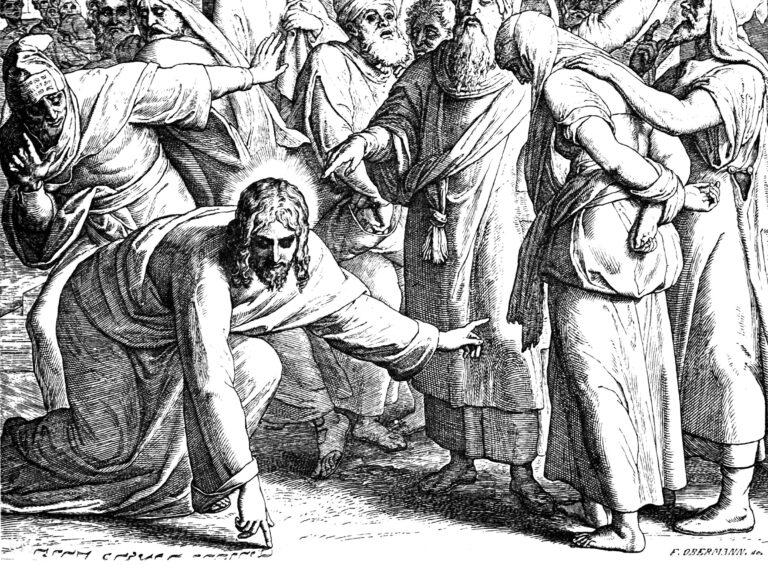


Jesus never apologized for the crowd. He also never confused it with the church. Between the two stood something most planters skip: the cost. I want to suggest that understanding all three, and their sequence, should form how we plant churches.
The Problem: We skip the middle.
Church planters can accidentally fall into one of two ditches.
The first ditch is anti-crowd theology. You’ve heard it: “We don’t want consumers. We only want committed disciples.” So the planter makes the barrier to entry high from day one. No crowd. Just a deep community. The result is a tight, relationally-dense group that rarely has fresh people moving through it. It becomes a greenhouse without windows. The mission starves because there’s no one left to reach.
The second ditch is a crowd without cost. The gathering is warm, the music is good, the teaching is solid, and people keep coming back. But nothing much is ever asked of them. Next steps are vague and don’t cost anything real. The crowd stays a crowd. The church never really forms. While attendance metrics look healthy, discipleship depth tends to stay shallow. Leaders burn out wondering why nobody is owning the mission.
If you’re a church planter, you might tend toward one or the other ditch. But Jesus modeled a better, more intentional way. The crowd was neither avoided nor treated as the destination. It was the field. The church was called out of the crowd through cost. The sequence matters. I’ll explain what I mean in 3 “movements.”
“The church was called out of the crowd through cost.”
Movement 1: The Crowd
Open access. Low cost. High grace.
Jesus drew crowds. He healed on hillsides. He fed five thousand people who hadn’t asked for a meal. He preached the Sermon on the Mount to anyone who showed up. He didn’t require a background check before the fish and loaves went out. The crowd gathered around him because he was doing something real, and it cost them almost nothing to come watch.
This was by design. The crowd can be where people first encounter Jesus in a low-stakes environment. They can come, receive, observe, ask questions from the back row, and leave. They are not yet disciples. They are not pretending to be. The crowd is a grace extended to people who are not yet ready to count the cost.
We don’t build the church by refusing the crowd. We build it by stewarding the crowd well enough that some of them are eventually ready to hear what comes next.
The crowd is not a problem to be solved, but rather a grace to be stewarded.
“The crowd is not a problem to be solved, but rather a grace to be stewarded.”
Here’s what the “crowd” can look like in a plant: Your Tuesday night Bible Study. Your first Sunday worship gathering. A neighborhood dinner. A community ministry service. A public event. These are crowd spaces, costing the core team to build and maintain, and costing the newcomer almost nothing to attend. That asymmetry is intentional. You are creating a wide door. You are not yet asking anyone to carry anything.
Don’t despise the person who comes three weeks in a row and then disappears. Don’t measure your health by how many of your crowd converts to committed membership by month six. The crowd is supposed to be fluid. Some will stay. Many will cycle through. A few will hear something that makes them want more, which brings us to the next movement.
Movement 2: The Cost
Cost is the filter that forms the church. Unfortunately, here is where most planters either rush or go silent.
After the Sermon on the Mount, a man approached Jesus and said he wanted to follow him. Jesus did not hand him a welcome card and a parking pass. He said, “Foxes have dens and birds have nests, but the Son of Man has no place to lay his head” (Matthew 8:20, NIV). Another man said he’d follow but needed to bury his father first. Jesus said, “Follow me, and let the dead bury their own dead” (Matthew 8:22, NIV).
In John 6, after feeding the five thousand, Jesus told the crowd that unless they ate his flesh and drank his blood, they had no life in them. The text says many of his disciples turned back and no longer followed him. He watched them go. He turned to the Twelve and asked if they wanted to leave too. He did not chase the crowd. He did not soften the cost. He let it do its work.
This is not cruelty, but clarity. The cost reveals people’s readiness. It separates those who are drawn to the atmosphere from those who are drawn to the mission. And here is the thing church planters often miss: the cost is itself an act of love. You are not withholding from people by asking them to commit. Rather, you are inviting them into the thing that will actually change their life. A crowd that never gets invited to cost never gets invited to transformation.
The cost is not a barrier. It is a filter and an invitation. It reveals who is ready for the next movement.
“The cost is not a barrier. It is a filter and an invitation. It reveals who is ready for the next movement.”
What cost is not: It’s not necessarily a long membership class. Or a doctrinal litmus test. Or a level of biblical knowledge someone must reach before they belong. Cost is not a hoop, even though it is a direction. It’s a way of life you are asking someone to step into.
What cost is: Cost is a call to action and to deeper commitment. It is your expression of discipleship, sometimes known as a discipleship pathway. It’s saying, “Here is what following Jesus with us looks like. Here is what we are going to do together. Here is what we are going to ask you to commit to.”
The substance of that ask will be different in every context, but it needs to share the principle of dedicated belonging and deep discipleship. The cost is the way we say, “Here is how you belong, how you transform, and how you participate in the mission of Jesus with us.”
For a young church plant, the cost might be as simple as: commit to gathering with us weekly, be in a discipleship relationship regularly, and invest into the mission through service and giving. That is a cost. It is not enormous, but it is honest. And it separates the person who wants to watch from the person who wants to follow.
This is also where the planter’s courage gets tested. Introducing cost feels like you might lose people. And you might. Some will hear it and decide they are not ready, and they’ll stay part of the crowd. But the ones who say yes to the cost? Those are the people you build with.
Three Essential Aspects for the Cost to Be Effective
First, the cost must be tested. Start with yourself. Practice the commitment personally, and ask yourself if you are seeing transformation. Does what you are asking people to commit to bring about the vision you are sharing? Then bring in your core team of leaders. Ask them to participate fully. Be open to feedback. If they don’t understand or can’t participate, it may not be simple, clear, or effective. Be open to adjustments while holding the vision.
Second, the cost must be clear. Often, we get vague in communicating cost because we are speaking about lofty things. We move in and out of vision and cost and can leave people unsure of exactly what is the next step. People generally want to participate, and if they do not, start with a clarity check. Do people know what you are asking them to do? Do they have a basic understanding on how to do what you’re asking them to do? If you find a lack of commitment, start with examining your clarity before assuming people are just not interested.
Finally, the cost must be connected. The cost must connect to the vision of Jesus. It must communicate to the crowd that by committing to these things is how we believe the vision for the church and the vision Jesus has for their lives comes about. Vision will capture the heart, but the cost will capture their commitment.
“Vision will capture the heart, but the cost will capture their commitment.”
Most importantly, the cost must be connected to others. A person in the crowd can’t disciple themselves into maturity and mission participation alone. Too many discipleship pathways are just guideposts of activities for people to walk alone when they should be a map in the hands of a guide ready to walk with them. Does your discipleship pathway include a disciple maker ready to invest into the life of the one saying yes?
Movement 3: The Church
The church is not the crowd that stayed long enough to feel comfortable. It is the people who heard the cost and said yes.
Out of the thousands Jesus taught, he called twelve. Out of the twelve, he poured most deeply into three. We shouldn’t see this as exclusivity, but rather as how multiplication works. The twelve were not better people than the crowd. They were available people who said yes to a specific invitation from the one who was discipling them.
While the crowd gave Jesus an audience, the twelve gave him a movement. And from that movement, millions have been able to say yes to the cost, be discipled into faith, and formed into a disciple maker themselves.
Church, in its early form in your church plant, is going to be small. Uncomfortably small sometimes. Two families. A handful of people who show up on Wednesday nights and mean it. That smallness is not a sign of failure. It is the nature of the thing you are doing and is the context by which you can invest into ready disciples to help them become disciple makers.
Keep the goal clear. It’s not to fill a room, but to form disciples who will form other disciples. When you’re clear on the goal, that work happens at a scale you can actually see and know and touch.
“While the crowd gave Jesus an audience, the twelve gave him a movement.”
And while you’re investing into your three and your twelve, look for opportunities to connect with the crowd and invite them into the cost. Your work with your three and twelve is what empowers your effectiveness with the crowd. If you don’t have your three or twelve, you won’t be able to disciple a crowd.
Again, you do not build the church by removing the crowd. You build it by introducing the cost inside the crowd’s experience. The church that forms from cost is fundamentally different from a crowd that gradually consolidates. It is denser. More accountable. More fruitful. The people in it chose to be there. They have already demonstrated the quality that matters most in a disciple: willingness to say yes when something is asked of them.
And here is the long game: those disciples go back into the crowd. They become the ones who invite their neighbors. Who have conversations at lunch. Who bring people into the crowd space so the cycle starts again. The crowd feeds the cost. The cost forms the church. The church re-enters the crowd. This is how the movement multiplies. 
The Sequence Is the Strategy.
Most discipleship conversations get the sequence wrong because they are trying to solve two different problems at once: how to reach people and how to develop people. I want to suggest that the crowd-cost-church framework holds both, but it insists that they happen in order.
- The Crowd. Create space that is genuinely open. Low barrier, high grace. Don’t make people prove themselves to walk through the door. The Sermon on the Mount was free. The feeding of the five thousand was free. Your Tuesday gathering can be free. Invite everyone.
- Cost offered clearly. At the right moment, inside the crowd’s experience, name what it looks like to go deeper. Don’t apologize for it. Don’t bury it in qualifications. Say it plainly: this is what we are asking. This is what following Jesus with us costs. Some will say yes. Many won’t. Make sure you have disciple makers ready to walk with them, even if it is just you to start.
- The Church formed intentionally. The people who say yes to the cost become the core. Pour into them. Develop them. Carry the mission with them. And then watch them re-enter the crowd and start the cycle again.
A plant that skips the crowd usually stays too small to sustain a movement. A plant that skips the cost stays too shallow to produce one. A plant that skips the church formation step never multiplies. All three movements, in sequence, are how Jesus built what he built.
“The people who say yes to the cost become the core.”
A Word for Planters: You are not the crowd builder.
Your job is not to manufacture a crowd, hold a crowd, or convert a crowd on your own timeline. Your job is to hold the crowd with open hands, speak the cost with a clear voice, and trust the Holy Spirit to do the calling.
For many, the hardest part of this framework is the middle. The cost. Saying it out loud. Watching some people walk away. Resisting the urge to soften it so more people stay. Jesus watched people leave after John 6 and did not chase them. That kind of settled confidence in what you are building comes only from knowing that you are not building alone.
The crowd is God’s field. The cost is God’s invitation. The church is God’s harvest. You are a steward of all three. Tend the field. Cultivate laborers. Make the invitation legible. Celebrate every person who says yes. And trust the One who said he would build it.
“…I will build my church, and the gates of hell shall not prevail against it.” (Matthew 16:18, ESV)
“That kind of settled confidence in what you are building comes only from knowing that you are not building alone.”
Here are some additional key texts to check out:
- Matthew 5-7 – The Sermon on the Mount. The crowd gathered. Jesus taught freely. Cost came later.
- Matthew 8:18-22 – Here we meet would-be followers. Jesus named the cost without softening it.
- John 6:22-69 – After feeding the five thousand, Jesus introduced the cost. Many turned back. He let them go.
- Luke 14:25-33 – “Whoever does not carry their cross and follow me cannot be my disciple” (14:27, NIV). Cost language, plainly spoken.
- Luke 10:1-9 – Jesus sent the seventy-two into the crowd. They were the church, re-entering the crowd to continue the cycle.
- Acts 2:41-47 – At Pentecost, we see all three: Crowd, Cost (“repent and be baptized”), and Church formed from those who responded. Three thousand in a day.
- Acts 4:4 – “But many who heard the message believed; so the number of men who believed grew to about five thousand” (4:4, NIV). The crowd kept producing church.