



For the Bible’s grand story to be true, some important facts also need to be true. There needs to be a God in the first place. This needs to be the kind of God who can make decisions and intervene in history. He also needs to be a God who cares about what humans do—that is, he is good and wants us to do good things and not evil things. Below are five clues that tell us this story is totally possible and actually very likely to be true. The technical word for showing that Christianity is true is called “apologetics.”
In our opinion, clues to the truth of Christianity are everywhere you look. Listed below are five big ones, and we put them in the form of oxymorons, which is a phrase in which two truths appear to cancel each other out. For example, here are some common oxymorons you might have heard: “plastic glasses;” “pretty ugly;” “tight slacks;” and “Microsoft Works.” Here are five oxymoronic clues that this story is true:
Friendly Explosion
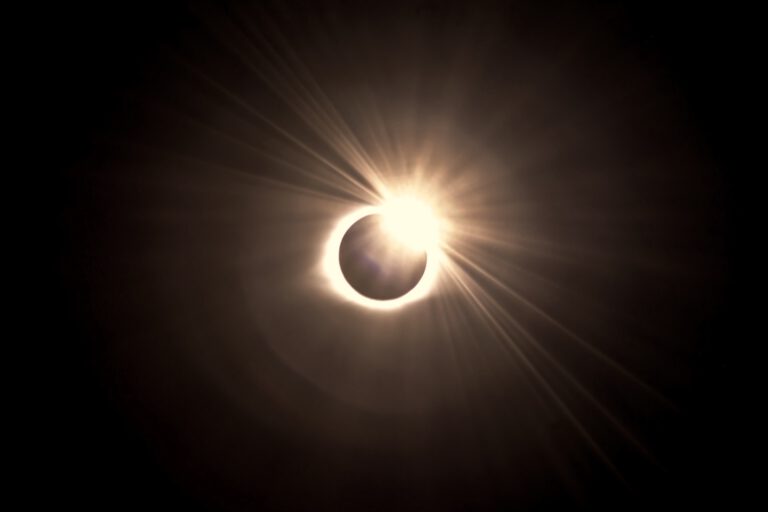
Scientists tell us the universe didn’t used to exist. Then an explosion happened (commonly called the “big bang”) and formed a universe. The universe that resulted from the explosion had certain conditions just right—to where, if those conditions hadn’t been just right, life couldn’t arise. It’s like dials in the shower. A little to the left, and it’s too hot. A little to the right, and it’s too cold. But this universe came into being with just the right conditions for life to be able to arise.
One philosopher of science puts it like this:
“One could think of the initial conditions of the universe and the fundamental parameters of physics as a dart board that fills the whole galaxy, and the conditions necessary for life to exist as a small one-foot-wide target: unless the dart hits the target, life would be impossible. The fact that the dials are perfectly set, or the dart has hit the target, strongly suggests that someone set the dials or aimed the dart, for it seems enormously improbably that such a coincidence could have happened by chance.”[1]
“The universe that resulted from the explosion had certain conditions just right—to where, if those conditions hadn’t been just right, life couldn’t arise.”
Simple Life
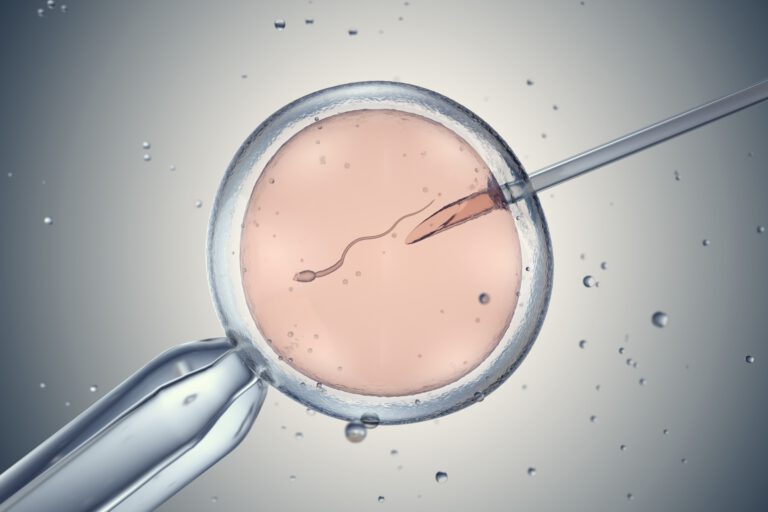
This doesn’t sound like too much of an oxymoron. Surely, simple life exists, right? The simplest form of life would be a single cell, and the cell is something we’ve learned about since we were kids. But there’s a twist when it comes to the cell: they used to think the cell was simple life. As scientists discovered more and more about the cell, it became clear nothing is simple about it at all.
As just one example, the genetic information of a cell is contained in DNA. DNA contains a shockingly complex system of letters providing specified instruction for what a cell does and how it replicates itself. Richard Knopp, author of Truth About God: What Can We Know and How Can We Know It?, writes, “One gram of DNA can hold 215 petabytes of information. With that capacity, DNA could physically store all the information ever recorded by humans in one room!”[2]
Here’s another example: two scientists, Chandra Wickramasinghe and Fred Hoyle, took a hard look at the cell and at how complex even a single cell was. And the scientists determined that for a cell to have come about through purely natural processes (without any help from a designer) would be the equivalent of 1 chance in 1040,000 (10 with 40,000 zeroes after it).[3] As Hoyle, an astronomer, put it, even an astronomer has trouble envisioning that number. (After all, it’s estimated that only between 1078 and 1082 atoms are in the observable universe.)[4]
“As scientists discovered more and more about the cell, it became clear nothing is simple about it at all.”
Unbreakable Piñata
Let’s say a marine jumps on a live grenade to save his buddies. If the point of life is merely for people to survive and pass their genes on to the next generation (“survival of the fittest”), then that guy was an idiot. Yet we know the marine who jumped on a grenade to save his buddies was the opposite of an idiot. We know he was a hero. He didn’t do the wrong thing; instead, he did the right thing.
A deep-seated sense of right and wrong is within us that goes way beyond, Did I survive the longest and get my genetics into the next generation? We know that to do what’s right sometimes means self-sacrifice, not self-survival. But how do we know that?
The apostle Paul called this the moral law being “written on our hearts” (Romans 2:14–15). Having this sense of right and wrong written on our hearts is the reason we know that even if Adolf Hitler had won and had brainwashed the entire planet to believe that it was a good thing to kill millions of Jews, it would still be evil. This is why we know that when Martin Luther King, Jr. said, “I have a dream,” his dream was right. And even if no one else had listened, his fight for equality between white and black people would have still been right.
“The apostle Paul called this the moral law being ‘written on our hearts.'”
So why are we calling this an “unbreakable piñata”? Because even when people try to break this moral law within (and we’ve all tried to break it from time to time), it’s still there. It remains true from generation to generation that certain things are valuable and good (e.g., honesty, kindness, and courage) even if we don’t put them into practice. And other things remain evil (e.g., murder, theft, lying, envy) even if we do put them into practice. This moral law “written on our hearts” is a clue that this story of a good God who created us is true. 
Deserted Grave
Somehow after Jesus was crucified and placed in the tomb, his tomb turned up empty within days. The grave was somehow deserted. How do we know? Well, because as soon as Jesus’ disciples started saying, “He is risen!” what was the quickest way to shut them up? Get the body and show everybody that Jesus was very much dead. But they didn’t get the body. They couldn’t get the body—because the tomb was empty.
After Jesus’ crucifixion, there’s no good reason his tomb should have turned up empty, yet it did (Matthew 28:11–14). There’s no good reason why so many people should have said they saw Jesus alive after he died, yet they did (1 Corinthians 15:5–8). There’s no good reason why even skeptics, such as Paul and James, should have become Christians, yet they did (Acts 9:1–5; John 7:5; Galatians 2:9). There’s no good reason why the church should have begun with thousands of people just weeks after the crucifixion in the very city where Jesus had been publicly crucified, yet it did (Acts 2:1, 5, 38, 41). There’s no good reason why Jesus’ disciples should have been willing to suffer and eventually die for their faith in Jesus, yet they were (Acts 5:18, 29).
“There’s no good reason why Jesus’ disciples should have been willing to suffer and eventually die for their faith in Jesus, yet they were.”
No good reason except for one. There is one reason that can explain 1) the empty tomb, 2) the post-death appearances of Jesus, 3) the conversion of skeptics such as Paul and James, 4) the huge beginning of the church in Jerusalem just weeks later, and 5) the willingness of the apostles to die for their faith in Jesus. The reason? Hear it from the apostles themselves:
Peter and the other apostles replied: “We must obey God rather than human beings! The God of our ancestors raised Jesus from the dead—whom you killed by hanging him on a cross. God exalted him to his own right hand as Prince and Savior that he might bring Israel to repentance and forgive their sins. We are witnesses of these things, and so is the Holy Spirit, whom God has given to those who obey him.” (Acts 5:29–32)
Cross Necklace
You don’t turn execution tools into jewelry. You don’t see people wearing electric chair earrings or nooses for bracelets. Yet we have cross necklaces. Why?
These people had just seen their leader get crucified. That was the Roman Empire’s way of saying, “Game over. You lost.” Yet within days, with smiles on their faces, these same people were telling everybody how their leader had won. They saw him die, but then told everybody how he had beaten death.
And the church started in the very city where Jesus had been publicly executed—just a few weeks after it happened. The church never should have gotten off the ground. The cross should have been the end. Yet the cross wasn’t the end. And the church continues to spread today all over the globe, even multiplying in places where governments try hard to shut it down. The persistence of faith in a crucified Messiah is a strange twist that hints that the crucifixion was just one chapter in a story that God was writing.
[1] Robin Collins, “The Fine-Tuning Design Argument: A Scientific Argument for the Existence of God,” Discovery Institute, September 1, 1998, discovery.org/a/91/.
[2] Richard A. Knopp, What Can We Know and How Can We Know It? (Renew.org, 2021), 73.
[3] Fred Hoyle, Facts and Dogma in Cosmology and Elsewhere (Cambridge: Cambridge University Press, 1982), 12.
[4] Patrick Kiernan, “Which Is Greater? The Number of Atoms in the Universe or the Number of Chess Moves?” National Museums Liverpool, accessed March 27, 2022, liverpoolmuseums.org.uk/stories/which-greater-number-of-atoms-universe-or-number-of-chess-moves.”