
Why Isn’t the Book of Enoch in the Bible?
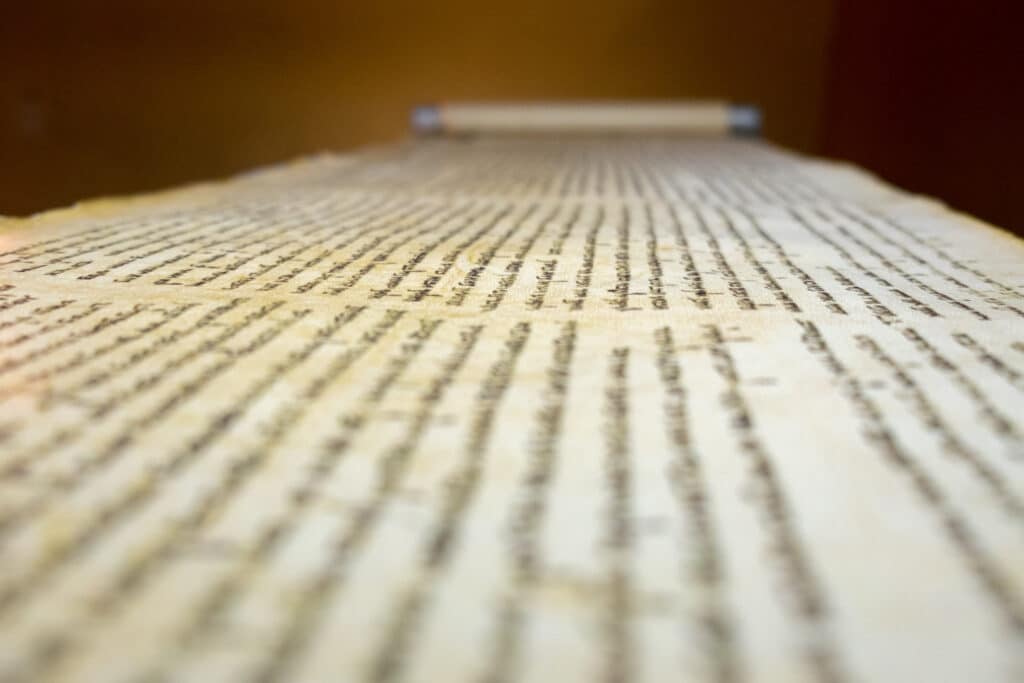
What do we know about 1 Enoch and the Bible? The first thing to say is that 1 Enoch is pseudepigraphal, that is, it was not written by Enoch. The […]
Summary of the Book of Enoch: Five Sections

1 Enoch naturally divides into five sections: The Book of Watchers (1-36), The Book of Parables (37-71), The Astronomical Book (72-82), the Book of Dream Visions (83-90), and the Letter […]
Summary of the Book of Enoch: Background and Purpose
A recent ad on X (formerly Twitter) promoted a tweet by the “Apostle John Welty” (if you doubt his apostleship, know his account is verified with a blue check). He […]
The Apocrypha and the Old Testament Canon
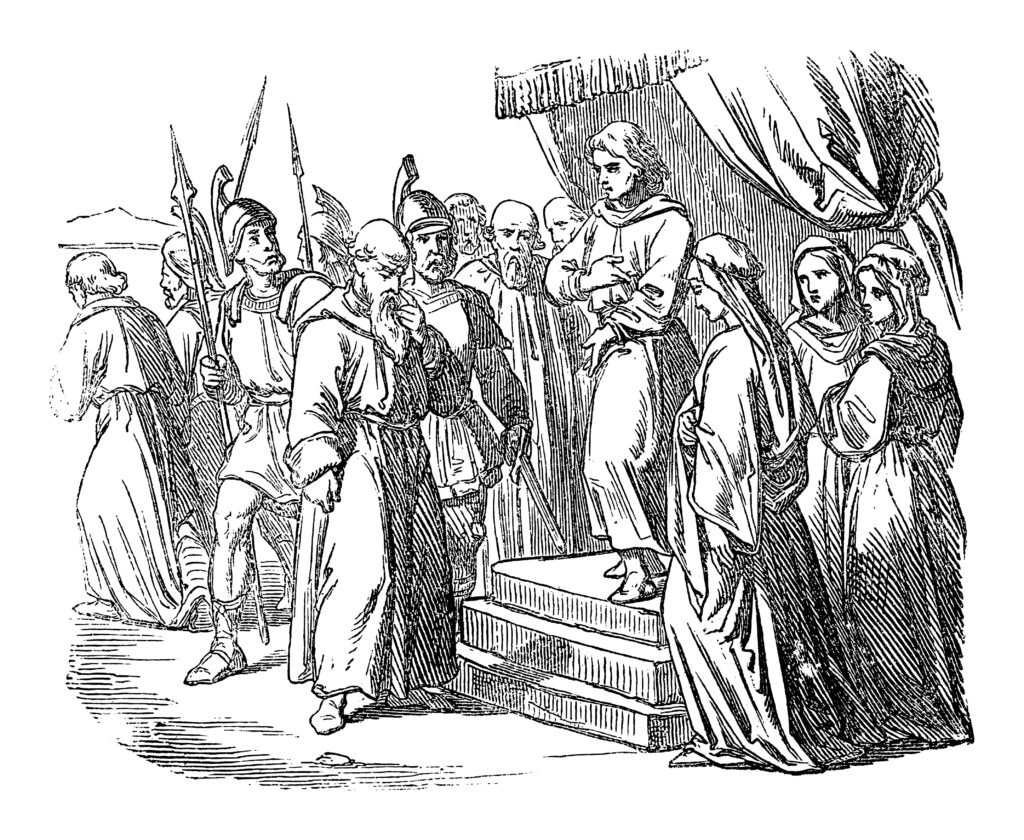
When the Hasmonian king Jonathan sent a letter to the Spartans seeking an alliance, he made a fascinating remark worth repeating. According to 1 Maccabees, King Jonathan says, “We have […]
What Books Are in the Apocrypha? A Summary of Each Book
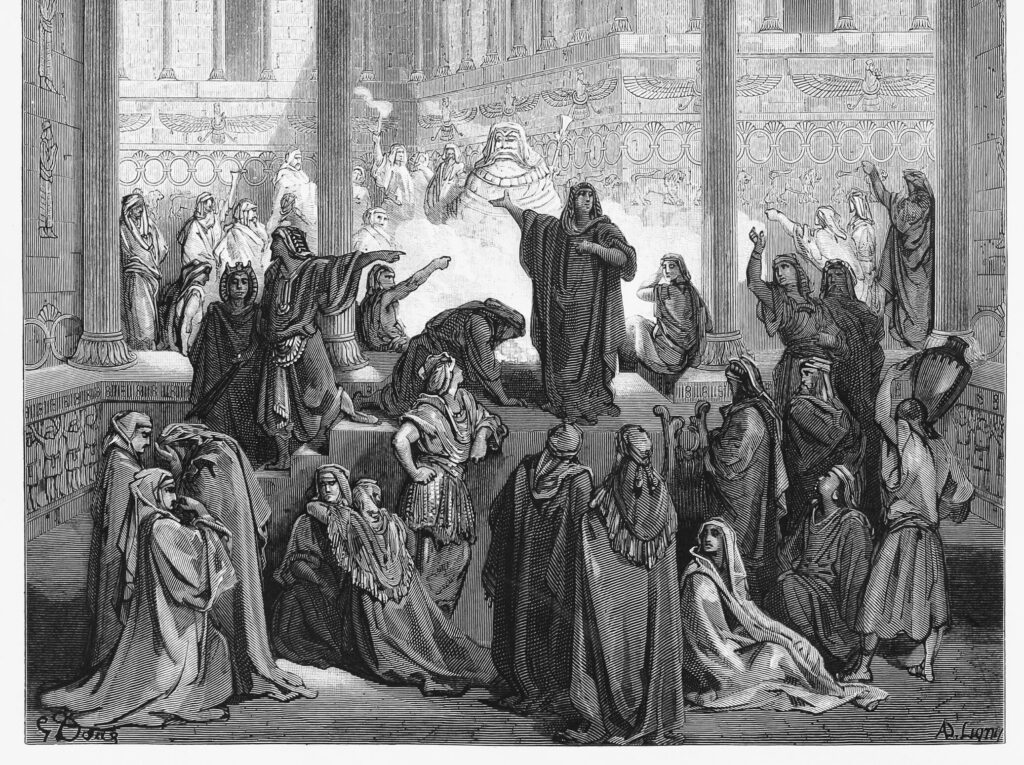
In an earlier article, we defined the Old Testament Apocrypha as a collection of Jewish books written from the fourth to the first centuries B.C., included in and apparently canonized […]
Summary of Ezekiel: Understanding the Basics of Ezekiel in the Bible

The book of Ezekiel is titled after the name of the prophet Ezekiel, son of Buzi who was among the exiles of Babylon. What do we know about this unusual […]
The Story of the Old Testament Apocrypha
The Apocrypha. Even the word is mysterious, perhaps conjuring up some Amazon.com-only work on the “lost books of the Bible.” For evangelicals, the Apocrypha can be intimidating, as its presence […]
What Is the Book of Enoch?

The Book of Enoch is perhaps one of the most widely known pieces of literature from the corpus known as the Old Testament Pseudepigrapha. It purports to be the work […]
When Was the New Testament Written?

When was the New Testament written? One way to answer this is to list the New Testament books and give their approximate date of composition. If you’re looking more for […]
Formation of the Old Testament Canon

How did we get our Old Testament? Who decided which books made the cut (and became “canon”)? Why are there differences between the list of books in Catholic and Protestant […]
Church History Debates: What Books Make It in the Canon?

The New Testament wasn’t delivered to the church in a leather-bound booklet. When it came time for the early churches to determine which books made the “canon,” there were multiple […]
Did Jesus really exist? Don’t we have just untrustworthy copies of copies of copies of the Gospels?

Did Jesus really exist? Although some scholars have questioned Jesus’ existence, we actually have remarkable evidence for the historicity of Jesus. In addition, there is remarkable evidence that what we […]
Did the Roman Catholic Church Give Us the Bible?

Many Evangelical Christians are now questioning foundational truths they have traditionally accepted. For example, in the midst of contemporary theological confusion, there are Evangelicals looking at the Roman Catholic Church […]
Canonization of the Bible: Its Definition and Process

What is the canonization of the Bible? The canonization of the Bible refers to the process of recognizing which books were considered Scripture by the people of God at the […]
New Testament Writers: Who Were They?

Who were the New Testament writers? There are 9 authors who wrote the 27 books that came to be known as the New Testament, and in this article, John Whittaker […]
Truth About God in Special Revelation
Special Revelation: How God Reveals Himself in History Knopp highlights that God’s miracles in real moments—like the Exodus, Mount Carmel, and Jesus’ works—aim to reveal the Lord’s unique identity. Scripture’s […]
The Power of Stories
Power of Stories: Unforgettable Stories That Reveal God’s Truth Instead of a theology textbook, Scripture unfolds God’s self-revelation through true stories that show who he is and what he has […]
How Is the Bible Our Final Authority?
The Bible’s Authority: Why Scripture Is Our Final Guide Orpheus J. Heyward explains that Scripture is authoritative because it is inspired by God and intended to shape conviction and character. […]
How Did We Get Our Bible?
This is Question #3 in Orpheus J. Heyward’s God’s Word: The Inspiration and Authority of Scripture.
What Is the Old Testament?
What is the Old Testament? God’s “Law, Prophets, and Psalms” That Tutor Us Toward the Messiah The Old Testament is the 39 books that contain God’s covenant promises, covenant laws, […]
Introduction to God’s Word: The Inspiration and Authority of Scripture
God’s Word: The Inspiration of Scripture — Introduction This video introduces Orpheus J. Heyward’s book, God’s Word: The Inspiration and Authority of Scripture, part of the Real Life Theology series. […]
God’s Word Author Q&A – Orpheus J. Heyward with Bobby Harrington
God’s Word and the Inspiration and Authority of Scripture Bobby Harrington interviews Orpheus J. Heyward to highlight why Scripture is essential for faith, growth, and hearing from God. Manuscript attestation […]
The Bible Is Better Than Broccoli

Bible Is Better: Habits That Transform Your Walk Bible Is Better reveals that Scripture is a unified, God-breathed story that renews your mind and reshapes how you see yourself, others, […]
Losing My Faith in Progressive Christianity: The Banned Books and Podcasts (Part 4)

Progressive Christianity Part 4 Lessons from Deconstruction Dave recounts a slow slide into progressivism. Influences like C.S. Lewis, Rob Bell, and The Liturgists shaped his doubts, loosening his trust in […]
How to Read the Bible like a Progressive

Read the Bible like a Progressive with Clear Discernment Progressive reading is shown as rewriting essential Christian doctrines to fit Western cultural values while proudly selecting which Scriptures still apply. […]
A Brief History of the Bible: From Creation to Now

History of the Bible as God’s Living Word History of the Bible shows that God’s word begins with creation itself, where God speaks the universe into existence and continually sustains […]
A 3-Step Process for Reading the Bible – Q&A with Orpheus J. Heyward

Reading the Bible – 3-Step Process for Understanding Observation sees what the text says. By reading Ephesians 1:3–4 in several translations and in its chapter and book context, you become […]
The Historical Evidence for the Death, Burial and Resurrection of Jesus – Evidence for Easter (Part 3)

Historical Evidence for Easter—Death, Burial, Resurrection Scholars from skeptical to believing affirm Jesus’ crucifixion, with ancient sources and archaeology detailing the practice and its brutality. In Jerusalem, the empty-tomb claim […]
How I Went from Atheist to Bible Believer

Atheist to Bible Believer — From Veil to Revelation Drawn by God’s light (2 Corinthians 4:6), the heart’s veil lifts to see Christ’s glory and to trust Scripture. Rather than […]
The Less We Use This, the More Relevant It Will Become.

Relevant in a Post-Christian Culture: Why Scripture Resurges Contrasting the raft with Noah’s ark, the article shows how Scripture can seem cumbersome until crises reveal its saving purpose. As secularism […]
Are We Turning into Skeptics of the Bible?

Skeptics of the Bible – Cultural Drift & Gospel Remedy Enlightenment roots, failed institutions, and online echo chambers train people to distrust external authority—including Scripture. Real-life fallout appears in moral […]
The Inspiration of the New Testament

The Inspiration of the New Testament — Why It Matters Jesus claims the Father’s authority, commissions apostles to teach everything He commanded, and promises the Spirit to help them recall […]
The Inspiration of the Old Testament

The Inspiration of the Old Testament – Core Teachings The Inspiration of the Old Testament is shown in how Moses recorded God’s commands, passing them to Israel as a lasting […]
Is a Late Canon Bad News for Bible-Believers?

Is a Late Canon Bad News for Bible-Believers – Historical Confidence Athanasius’s AD 367 list and the Councils of Carthage (397, 419) reflect recognition of all 27 books rather than […]
Making Sense of the Gap between the Writing of the NT and Its Compilation

NT and Its Compilation — Early Authority Explained Early churches received authoritative apostolic teaching orally long before a bound New Testament existed. Writers within the NT acknowledge each other as […]
On Gender and the Bible: What John Mark Hicks and Scot McKnight Get Right and Wrong (Part 1)

John Mark Hicks and Scot McKnight — Methods and Message Part 1 contrasts blueprint and trajectory readings, arguing New Testament commands embody theology and still guide the church. The article […]
Preparing Students for College: Intimate Relationship with Jesus

Intimate Relationship with Jesus — College Prep Insights Students thrive when intimacy with Jesus—not rule-keeping—anchors identity, joy, and worship. Encourage curious faith by welcoming hard questions, grounding answers in Scripture […]
Satan: Function and Foe

Function and Foe in Progressive Revelation OT usage of satan typically denotes an adversary or accuser, not a named devil; scenes like Job 1–2 and Zechariah 3 fit this role. […]
Satanic Imagery in the Bible

Satanic Imagery in Scripture’s Story Satanic Imagery spans apocryphal voices and the Dead Sea Scrolls, where names like Mastema and Azazel shaped Jewish views of evil opposing God. Old Testament […]
Uncertainty Isn’t Your Enemy

Uncertainty in Faith — Reasons To Engage Uncertainty isn’t faithlessness; we “know in part” yet follow Jesus, letting questions mature trust and perseverance. Questions can signal God’s image in us—curious […]
The Slaughter of the Canaanites: Our Options

The Slaughter of the Canaanites – Exploring Interpretive Approaches Historical, theological, and allegorical explanations reflect how Christians wrestle with these ancient commands. Scholars offer views ranging from hyperbole and moral […]
Review of Rob Bell’s What Is the Bible

Review of Rob Bell’s What Is the Bible and Its Theological Implications Does Rob Bell challenge biblical authority? The review critiques his claim that Scripture is purely human and not […]