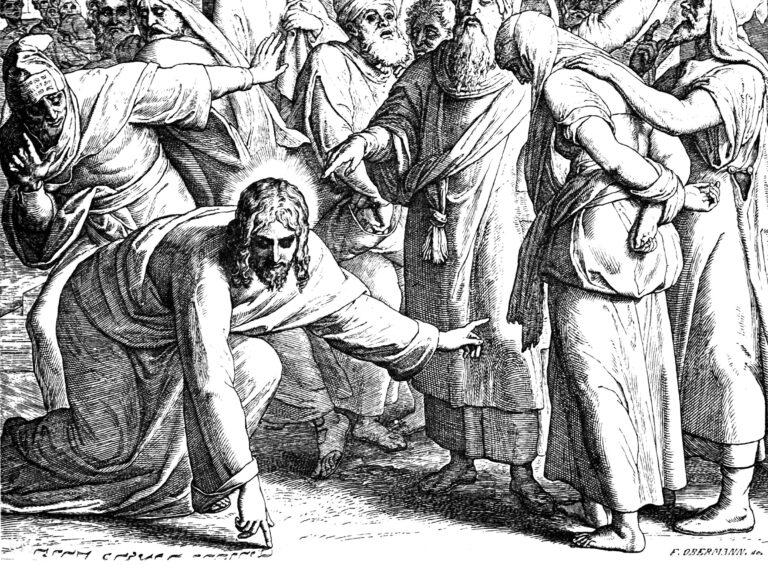



Christians have faith that the Bible is inspired by God. With deep humility, we trust that God has revealed himself through Christ, and that the testimony of the early Christians is trustworthy and true. The Bible’s contents have been put to the test for two thousand years and still survive, indeed they thrive. No other piece of writing in all of history has endured the scrutiny applied to the Bible.
But how do we know it’s inspired by God?
Not every reason persuasive to Christians will be persuasive to everybody else. But here are some of the reasons that have convinced Christians throughout the centuries that the Bible is inspired by God:
1. Internal Claims: The Bible repeatedly claims divine origin, using phrases like “Thus says the Lord” hundreds of times. Second Peter 1:21 reads, “For prophecy never had its origin in the human will, but prophets, though human, spoke from God as they were carried along by the Holy Spirit.” Second Timothy 3:16 reads, “All Scripture is God-breathed and is useful for teaching, rebuking, correcting and training in righteousness.”
2. Fulfilled Prophecy: There are dozens of specific Old Testament prophecies concerning the birth, life, and death of Jesus Christ that were documented centuries before they occurred as evidence of a divine author whose intelligence and transcendence far surpasses that of humans. See especially Isaiah 53 and Psalm 22.
3. Unity and Harmony: Although written by roughly 40 different authors over 1,500 years across three continents and in three languages (Hebrew, Aramaic, Greek), the Bible maintains a single, coherent narrative focused on God’s redemption of humanity. There are more than 63,000 cross-references in the Bible, showing an intricate unity that serves as evidence of a single divine mind behind the text.
“Although written by roughly 40 different authors over 1,500 years across three continents and in three languages, the Bible maintains a single, coherent narrative focused on God’s redemption of humanity.”
4. Historical and Archaeological Accuracy: Findings continue to corroborate biblical accounts of ancient people, places, and events—such as the existence of the Hittites or the city of Jericho—further validating the reliability of the inspired text. The Dead Sea Scrolls, discovered in the 1940s, corroborate the accurate preservation of many of the Old Testament texts. Scholars date them to as early as the 3rd century B.C.
5. Eyewitness Accounts: Authors like Luke (Luke/Acts) gathered eyewitness testimony, and apostles like Peter affirmed they were eyewitnesses, not creators of myths.
6. Manuscript Abundance: There are nearly 6,000 Greek New Testament manuscripts that have been found, far more than any other ancient book, allowing us to reconstruct the original texts with a high degree of certainty.
7. Extra-canonical Corroboration: Non-biblical texts such as the Pilate Stone, the Tel Dan Stele, and the Cyrus Cylinder corroborate biblical accuracy, but from non-Jewish cultures.
8. Endorsement by Jesus: As a central figure of faith, Jesus’ own treatment of the Old Testament as the authoritative and accurate “Word of God” is a primary reason for Christian belief in its inspiration.
9. Transformative Power: Believers cite the “living and active” nature of the text (Hebrews 4:12), noting its unique ability to convict, comfort, and radically change lives and even cultures over millennia.
10. Witness of the Holy Spirit: Many Christians describe an internal conviction or “witness of the Spirit” that confirms the truth of Scripture in their hearts as they read it.
“Believers cite the ‘living and active’ nature of the text, noting its unique ability to convict, comfort, and radically change lives and even cultures over millennia.”
As Christians, we can remain convicted that the Holy Spirit guided the entire process of its writing and preservation recounted in this book. Now, certainly, some books are weightier than others. For example, few people would argue that 2 John is as important as the Gospels. If you were sent to a remote mission field and had to choose only one of Paul’s letters, would it be Philemon or Romans? Do we reckon that Paul thought Romans and Philemon were equal in weight? Most likely not. Romans lays out the doctrines of Christianity in their fullness, whereas Philemon was Paul addressing a specific problem that had arisen between two Christian men.
Throughout history, Christians have debated these issues. And they still do. Some people prefer the Synoptic Gospels to John. Others, however, prefer John. Martin Luther is a good example here. He thought most highly of the Gospel of John, considering it preferable to the other three because it will “show you Christ and teach you all that is necessary and salutary for you to know, even if you were never to see or hear any other book or doctrine.”[1] However, Luther “relegated certain books (Hebrews, James, Jude, Revelation) to a distinctly inferior place.”[2]
Famously, Luther struggled with the “faith without works is dead” teaching of the book of James, causing him to make the now-famous critique, “St. James’s epistle is really an epistle of straw . . . for it has nothing of the nature of the gospel about it.” In other places, however, he shows respect to the Epistle of James.[3]
“Some books are weightier than others.”
In addition to their own preferences within the canon, Christians have different understandings of the concept of inspiration as well. Some see certain parts of the Bible as more inspired than others. On the opposite extreme, others take an extremely high view of inspiration, to the point that they view the whole Bible as coming down from God with very little human involvement. This view is similar to the way Muslims understand the inspiration of the Quran.
Muslims believe there was a very precise way that the Quran was passed down from God to humanity: God spoke to the archangel Gabriel, then Gabriel recited the words to Muhammad, then Muhammad recited the words to his scribe Zayd, and then Zayd wrote down the words. Muslims claim there is an unbroken chain of authority from God to the written word, without any meddling by humans. 
Christians tend to approach the “inspiration” conversation a little differently than Muslims do. Christians believe the scriptures are inspired but not unmitigated by the thoughts of humans, or of culture. Most Christians hold the view that God cannot be characterized as speaking one language. This is one reason why the Bible is commonly translated into other languages. Muslims differ here; they believe God actually speaks Arabic.
Devout Muslims are expected to be familiar with Arabic. They typically pray in Arabic and do not consider translations of the Quran to be the actual Quran at all. A translation of the Quran is something of an oxymoron. Once the text assumes the clothing of another language, it ceases to be the Quran. Translations of the Quran are not from God—only the Arabic version is authoritative.
“Christians believe the scriptures are inspired but not unmitigated by the thoughts of humans, or of culture.”
Christians, however, believe the Bible is inspired whether translated into English or Spanish, or left alone in Hebrew and Greek versions. In Christianity, the message is what is inspired by God. The language medium is far less important. In fact, Christians tend to believe God utilized the original cultures, languages, and lives of the authors in the inspiration process. God worked within the hearts and minds of the biblical writers to accomplish the revealing and preservation of his Word.
These reasons illustrate why Christians worship Jesus, not the Bible. The text is helpful and authoritative because it helps us to understand God—who revealed himself in Jesus Christ. Jesus clarified God’s final revelation to us. The entire Bible is crucial to us precisely because it helps us to understand the profound significance of Jesus, because without the Bible, we would have no context for understanding who Jesus is, why he needed to die, and how we are connected to God’s intentions for humans in his long-unfolding story. And that story is recounted only in the Bible. Without the Bible, we don’t understand Jesus, his teachings, and the central act of human history—His resurrection. The Bible fleshes out the meaning of Jesus, both before his life, and in the aftermath of his death. We have no context without the Bible. It is infallible unto salvation: sufficient for teaching us how to be saved and how to live the saved life.
[1]. Martin Luther, “Preface to the New Testament (1522, Revised 1546),” in Martin Luther’s Basic Theological Writings, 3rd Edition (Minneapolis, MN: Fortress Press, 2012), ed. by William Russell and Timothy Lull, 96.
[2]. R. P. Meye, “Canon of the New Testament” in International Standard Bible Encyclopedia (Grand Rapids, MI: Eerdmans, 1988), 605.
[3]. Luther, “Preface to the New Testament,” cited above, 96.