


Grace and Faith: The Response That Honors the Giver
- Faith answers grace with gratitude, because allegiance and faithfulness are the proper human response to God’s gift in Christ.
- John’s signs expose shallow belief, warning that seeking Jesus for miracles misses the deeper need for who He is.
- Ephesians shows grace and faith as loyalty, calling believers to exalt Jesus and live out good works that make Him famous.
Why is faith a necessary response to grace? Well, as gratitude is the response to a great gift, so faith, or faithfulness, allegiance, fidelity, are the human response to God’s grace in Jesus Christ. And let me unpack that in two ways.
First, from the Gospel of John. You know that John loved the number seven. You go to Revelation, there’s seven churches, seven bowls, seven lamps, seven candles. The seven is everywhere. It’s also in the Gospel of John, in the miracles that he recorded. Now John 20:31 says Jesus did many other miracles, but these are recorded so that you may believe that He is the Christ and have life in His name.
Now I’m thinking, if the miracles are to build belief, then let’s just stack them up—like hundreds, maybe thousands of miracles. No. John gives seven. Why seven? Oy vey, because he’s Jewish. Seven represented the numbers three and four. Three is the number for God. Four is the number for human beings. And virtually every time in the Bible you run across seven, it is God doing a work among men. That’s why seven is really very clever.
In those seven, John is giving us the stages of discipleship. And I’m not going to walk through all seven, but I want to talk about number two and number three. They’re both about a healing—the healing of a nobleman’s son and the healing of a lame man.
“John is giving us the stages of discipleship.”
The nobleman’s son was in Capernaum, but the nobleman was fifteen miles away in Cana. And he came up to Jesus and said, “Heal my boy. He’s about to die.” I mean, it’s a passionate plea, right? And Jesus rebuked him for his lack of faith. Why do you think I have to go down to Capernaum to heal him? I could state it right now and he would be healed. Why would Jesus kick a man while he’s down? I mean, his boy is about to die. His heart is burning in his chest.
Jesus didn’t just criticize him. The verb is actually plural: “Why do y’all doubt?” What Jesus was getting at is that it’s not just the man but the crowd who needed a miracle to believe in Jesus. In other words, they weren’t coming to Jesus for who He was. They were coming to Jesus for what they could get out of Him. And what John is doing with this particular miracle, or what he calls a sign, is saying you can’t. If you just come to Jesus for what you can get out of Him, you will never get from Him what you really need. But if you come to Him for Him, all of your needs, all of your desires—well, maybe not all your desires—but all that you should desire will be fulfilled in Jesus. So that’s the first story.
“If you just come to Jesus for what you can get out of Him, you will never get from Him what you really need.”
The second story is about a lame guy. This is in Jerusalem, like at the other end of the country. He’s lying at a pool called Bethesda. And you can go there and see it today—five porticos, just on the north side of Jerusalem, just outside the temple. And at this particular pool, when the springs would bubble up, according to their tradition, the first person who got in the water would be healed of whatever ailment they had. Which seems odd to me, because the first person in is the one who needs it the least, right?
And what Jesus does is go to this lame guy. He’s been lame from birth. And He says, “Do you want to be healed?” Now the answer obviously is, “Yes, I want to be healed.” What does the man do? He begins to complain. “I don’t have anyone to throw me in the pool.” (I don’t like this guy. And if I do my job right, you won’t like him either.)
Jesus heals him. It’s the Sabbath. He picks up his mat and walks away. He goes into the temple, and the leaders of the temple said, “How dare you carry your mat on the Sabbath? Who told you to do that?” 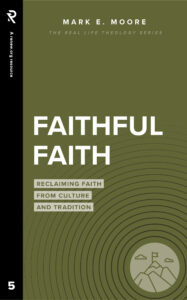
He said, “Well, this guy healed me.” “Where is he now?” “Well, I don’t know.” How could you not know where the man is who healed you from this congenital problem of paralysis?
They said, “If you see him, you tell us.” (Why would anyone do that? He gave him his legs.) But sure enough, a little while later, Jesus comes up to him and says, “Hey, you better stop sinning or something worse is going to befall you.”
“How could you not know where the man is who healed you from this congenital problem of paralysis?”
Well, what had the man been doing? How was he sinning? Like, was he murdering? Not in the temple. Was he stealing? No. He could have been jaywalking. But no. His sin was the worst sin of all—the sin of disbelief. And Jesus warns him. You know what that guy does? He goes straight to the leaders and says, “That’s the guy over there that healed me.”
Why? Why would he do that? Because he prioritized the religious leaders who had rejected him rather than Jesus who healed him.
See, that’s what happens when people come to Jesus for what they can get out of Him rather than for who He is. And the warning that John is giving us is this: you had better be careful because your faith in Jesus is not for what you can pull out of Him but for who He is. And until you get into Him, you won’t know all that He has to offer you.
Now this idea of faith and works really comes from Ephesians 2:8–10. It’s one of the most powerful passages. So understanding the essential nature of true faith in Jesus—not for what you can get from Him but who He actually is—let’s take that into Ephesians 2:8–10, where Paul says that we are saved by grace through faith, that not of ourselves, that anyone should boast. It is a gift of God. For we are created in Him for good works.
These terms are actually part of a larger patron-client system in the ancient world. Two percent of people, the patrons, owned everything. Below them was about five percent of the people who worked in their home. As in, they lived in their home—doctors, lawyers, teachers.
“These terms are actually part of a larger patron-client system in the ancient world.”
All those below them were clients. And a client, in order to survive, had to attach themselves to a patron. And the patron would provide gifts like money, jobs, lawyers, medical care. Those gifts had a specific Greek name. It was charis, from which we get the New Testament word grace.
On the other hand, what the clients gave to the patron—and the reason he wanted all the clients he could get—is they gave him loyalty, fidelity, allegiance. You know what they called that? Pistis, the Greek word for faith.
So our theological phrase “saved by grace through faith” is actually a sociological description of how people lived in the ancient world and how we are to live with God as our Patron.
You know what a client’s job was? It wasn’t to mow the lawn of the patron. It wasn’t to fix his dinner. It wasn’t to harvest his field. It was to make the patron famous.
So if the patron was going to town to give a political speech, all his clients followed. Why? Because their job is not to work for him but to exalt him.
And that, my friends, is the Great Commission.
Our job is not to win the world. Our job is to make Jesus famous. He will win the world.
This is Question #2 in Mark Moore’s Faithful Faith: Reclaiming Faith from Culture and Tradition.
Keep reading: what the Bible says about righteousness.