


Imagine to your delight that your teenage son begins to read the Bible regularly. You are thrilled. You have patiently and prayerfully sought to pass on the way of Jesus to your children, and nothing could make you happier that to see your teenage son’s faith growing to the place where he’d begin reading the Bible on his own.
Then, one evening, he stumbles out of his room looking a little confused and concerned, and asks, “Why did God hate Esau?”
You’re caught off-guard. You’ve taught your son since he was tiny that God loves everyone. You even tried to teach him when he was young not to say that he hates anyone. Hating is wrong.
He continues: “I was reading Romans, and it says that God hated Esau. Why?”
Sure enough, that’s what Romans 9 says. Not only that, but Paul is quoting from the Old Testament when he writes that, so he’s affirming that idea as part of what he’s teaching in Romans 9.
So, why did God hate Esau?
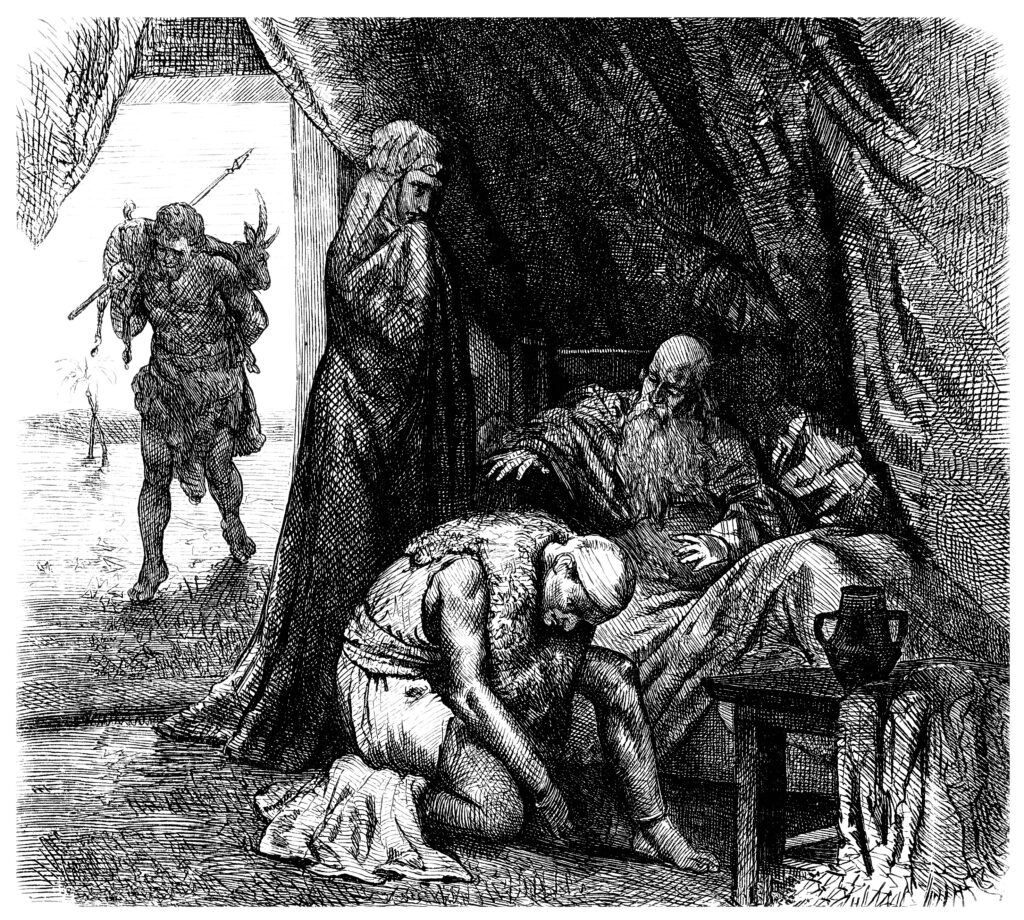
This statement is best known from Romans 9:13 (NASB) which says, “Just as it is written: ‘Jacob I have loved, but Esau I have hated.’” Jacob and Esau are the twin sons born to Isaac and Rebekah. You can read their story in Genesis 25-36 which concludes with a listing of Esau’s descendants and the historical note that Esau was the father of Edomites (Genesis 36:43).
“Jacob and Esau are the twin sons born to Isaac and Rebekah.”
The first thing to consider in answer to this question is that in Romans 9:13 Paul is quoting from Malachi 1:2-3. Whenever we see an Old Testament passage quoted in the New Testament, the first thing we should do is look up the passage in the Old Testament and make sure we understand that passage in its original context.
When we look at Malachi 1:1-5, one important fact to notice—that helps us understand what it means when it says God hated Esau—is that Jacob and Esau are two brothers who become two nations. Jacob’s descendants become the nation of Israel and Esau’s the nation of Edom as noted above. When the Bible says, “Jacob I have loved, but Esau I have hated,” the primary reference in Malachi 1 is not the individuals but the nations. And the point is that God has brought judgment on Esau/Edom. As a people, they are under God’s wrath.
The reason for that is the nation of Edom’s long history of opposition to God and to God’s people, Israel. When Malachi writes these words, it has been approximately 1400 years since the individual named Esau lived. The Edomite people group who derived from him should’ve shown love to the nation of Israel since Israel and Edom both descended from the same family. Instead, they had shown Israel nothing but hostility and disdain for centuries. They even rejoiced in her destruction at the hands of the Babylonians. Because of this hostility, throughout the Bible, Edom is frequently described as wicked and treacherous and thus condemned by the prophets (see the book of Obadiah, for example). They stand under God’s judgment, which is why according to Malachi 1:4 their country lies in ruins.
“Throughout the Bible, Edom is frequently described as wicked and treacherous and thus condemned by the prophets.”
So when God says he hates Esau in Malachi 1, he’s referring to a nation, not an individual. 
Another thing to keep in mind is that the word “hate” in the Bible has a range of meanings that does not always include the strong emotional connotations that the English word “hate” always has. For example, Luke 14:26 recounts Jesus as saying that someone cannot be a disciple of Jesus unless he hates his own father, mother, wife, children, brothers, sisters, and even his own life. When Matthew quotes these words of Jesus, however, he clarifies the meaning by writing that whoever loves family more than Jesus cannot be his disciple (Matthew 10:37). In other words, the word “hate” in Luke 14:26 does not mean “despise with strong emotional aversion.” It means that to be a disciple of Jesus, we must love Jesus more and love our family less.
So sometimes in the Bible, the language of loving and hating means something different than what we might think it means. In some contexts, it offers a contrast between preferring one object over another. In other contexts, the language of loving and hating can have the sense of choosing and rejecting. In the case of Jacob/Israel and Esau/Edom, Israel is the chosen covenant people of God (i.e., they are “loved”) and Edom is not (i.e., they are “hated”). What’s more, because of Edom’s wicked behavior for centuries, not only are they not the chosen covenant people but they are people deserving of God’s wrath. That’s the point in Malachi 1:1-5.
“Sometimes in the Bible, the language of loving and hating means something different than what we might think it means.”
Why does Paul quote this passage in Romans 9:13? In context, Paul is demonstrating the key idea that “they are not all Israel who are descended from Israel” (Romans 9:6, NASB). That is, he is showing that just being a physical descendant of Abraham, Isaac, and Jacob does not automatically make people “children of promise” (Romans 9:8). In the case of Jacob and Esau, Jacob was chosen to carry forward the promise God made to Abraham and Esau was not.
So the point of quoting the words “Jacob I have loved, but Esau I have hated” in this context is that Jacob and the Israelites were the chosen line of promise but Esau and the Edomites were not. Esau, and the Edomite people that came from him, don’t have a claim on the Abrahamic promise just because they physically are also Isaac’s descendants. In fact, they had further disqualified themselves by their wicked behavior.
So physical lineage alone does not make someone part of God’s promised family. Paul will build this out through the rest of Romans 9 and 10 and draw it to a conclusion in chapter 11 by showing that God has one family tree now found in the Messiah Jesus and composed of both Jews and Gentiles who have faith in Jesus.
“God has one family tree now found in the Messiah Jesus and composed of both Jews and Gentiles who have faith in Jesus.”
So again, God didn’t hate Esau the brother of Jacob in the sense that our English word “hate” means. Rather he didn’t choose Esau as the bearer of the promise. Furthermore, for centuries the people of Esau, the Edomites, constantly chose wickedness and opposition to God’s promise and God’s people and thus stood under God’s judgment. Therefore to give the sense of what these words mean, we could translate them in this way: “Israel I have chosen, but Edom I have rejected.” That’s the point in Malachi 1 and that’s part of the rhetorical point Paul is making in Romans 9.
Yet this is only a small point in the much larger argument Paul is making throughout Romans, that—whether you’re Jew or Gentile, of Edom or Eugene, OR—we all have sinned and fallen short of God’s glory and are invited to be justified by God’s grace through faith in the redemption that came by Jesus.