What Is Holiness and Why It Matters for Kingdom Living
- Holiness is a lifestyle of separation from self-rule to God’s kingdom rule, marking what it means to live under God’s reign.
- Scripture teaches that holy living shows up through honorable conduct, good deeds, and obedience that points others to glorify God.
- Choosing to abstain from fleshly passions and live as God’s servant reveals the practical heart of holiness in everyday life.
We’re going to seek to answer the question, “What is holiness and why is it important?”
Now, if we’re reading Scripture, and we’re reading enough of it, we’re eventually going to come to something in 1 Peter 1:16 (ESV) that is huge, that rocks our world. It is Peter’s quote in his epistle which says, “You shall be holy, for I am holy.”
It’s a command by God Himself that Peter is quoting, and it’s hard for us to reason away. It’s a quote that is almost as simple as it gets in the Bible, and it’s really difficult for us to misinterpret it. So our question here is a critical one because we need to be able to answer it so that we can live it out. We need to live it out so that we can be fully obedient to God. So here’s our answer:
Holiness is a lifestyle of separation from self-rule to kingdom rule. It’s important because holiness is our marker of a kingdom life.
In other words, you know you’re living a kingdom life if you’re living a holy life. At its core, the word holy means to be separate. Just like there is no God like Jehovah, He desires that His people embody that same mindset, that there are no people like His people.
Just as God’s holiness, or His separateness, was seen through His actions, the people of the kingdom displayed their holiness, their separateness biblically through their actions, through their conduct, what they would do and what they would not do.
Peter gives us what this looks like in a very practical sense, in the ancient world and even today, when he writes this in 1 Peter 2:11–16 (ESV):
“Beloved, I urge you as sojourners and exiles to abstain from the passions of the flesh.”
This is what it looks like to be holy. It’s what it looks like to be separate, to abstain, to separate yourself, to deny yourself the very passions of the flesh which wage war against your soul. He also says,
“Keep your conduct amongst the Gentiles honorable.” 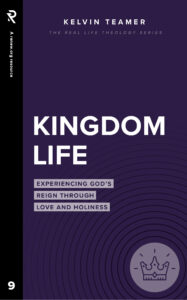
“Beloved, I urge you as sojourners and exiles to abstain from the passions of the flesh.”
Your conduct is important if you’re going to live out holiness. Peter goes on to say,
“. . . So that when they speak against you as evildoers, they may see your good deeds and glorify God on the day of visitation.”
Good deeds—that’s separate, that’s holiness. That’s what it looks like in a real and practical sense. Peter continues,
“Be subject for the Lord’s sake to every human institution” (1 Peter 2:13, ESV).
Keep the law of the land. That’s what holiness looks like in a very real sense.
“Whether it be to the emperor as supreme or to governors as sent by him to punish those who do evil and praise those who do good, for this is the will of God.” (1 Peter 2:13-15, ESV)
“. . . So that when they speak against you as evildoers, they may see your good deeds and glorify God on the day of visitation.”
You know what holiness is at its core? The bottom line of holiness is to keep the will of God.
“That by doing you should put to silence the ignorance of foolish people. Live as people who are free, not using your freedom as a coverup for evil, but living as servants of God.” (1 Peter 2:15-16, ESV)
If you want to know what holiness is, it’s when you and I decide we are going to live, bar none, come what may, as servants of God.
That’s what the kingdom life is all about.
This is Question #3 in Kelvin Teamer’s Kingdom Life: Experiencing God’s Reign through Love and Holiness.
For the fuller picture, see Righteousness in the Bible: Meaning, How We Receive It, and How We Live It.