



In 1961, the newly elected President of the United States John Fitzgerald Kennedy announced to the world that the United States of America was going to the moon. In several speeches, Kennedy explained that this endeavor would be one of the greatest achievements of all human history. The moon is a hostile, unexplored place 240,000 miles away. We would go in a rocket 300 feet long, made of alloys not yet invented. The rocket’s construction would require the precision of a fine watch. It would need the power of ten thousand automobiles to escape the atmosphere of earth. Upon returning to earth, the rocket would travel 25,000 miles per hour and be subjected to temperatures almost half that of the sun—hotter than Texas, he quipped at Rice University in Texas.
And, Kennedy declared, we will do this before the end of the decade. This 79 second clip of his speech at Rice University is worth your watch. This slightly longer clip is also inspiring and worth two minutes of your time.
Though Kennedy didn’t live to see it, I did. On the living room floor of my house, surrounded by my four siblings and given special permission by my dad to stay up late, at 9:56 p.m. Nashville time I saw Neil Armstrong step out of his spacecraft and onto the moon.
Kennedy’s leadership in the Apollo project literally changed the world.
What Kennedy provided for post-War America through the space program is the same thing that the American church desperately needs today: leadership.
“Kennedy’s leadership in the Apollo project literally changed the world.”
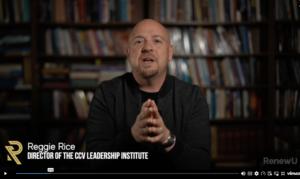
Leadership is how the church came to be. Leadership is how your church came to be. Leadership is how you came to Jesus. Leadership is how churches can flourish in an increasingly faithless and hostile America. Leadership will help you live up to your calling. Leadership will give the world a chance to say yes to King Jesus.
So the church ought to believe in leadership. It ought to raise leaders. In short, we must create a culture of Christlike, competent leadership in our congregations.
The Need for Leaders
Throughout the pages of Scripture, consider what God has done through leaders. Moses led the Exodus. Joshua led the conquest. David led the nation. Nehemiah led the Restoration. Peter led Pentecost. Paul led the Mission.
In the church’s history, Irenaeus led orthodoxy. Athanasius led Nicene faith. Augustine led theology. Patrick led Irish faith. Benedict led monasticism. Luther led the Reformation.
Many churches have mixed feelings about leadership, often preferring sameness or mere tradition. This is a tragedy, because God wants his people led. No organization can ever just stay the same. Either it is going forward or it is dying. And churches that don’t practice Christlike, bold leadership are churches whose future is dim—not just the congregation itself, but its members as well.
A sad example of this can be found in the fact that 3,800 churches close their doors every year in the U.S. That’s ten congregations per day. In some fellowships, the problem is proportionally worse. The mainline Protestant denominations in the U.S., whose leadership has largely lost its way, are all in a massive freefall. The United Methodist Church once included one out of every four Americans in its membership. Today less than 1% of Americans will be in attendance in UMC churches this Sunday. The Disciples of Christ, once a major player in Protestant U.S.A. will collectively have fewer than 100K this Sunday. There will be more people at the opening football game of the Tennessee Volunteers on September 5 than there will be in all DOC churches combined.
“The mainline Protestant denominations in the U.S., whose leadership has largely lost its way, are all in a massive freefall.”
Even in the evangelical world, a number of congregations are at risk. The Southern Baptist Convention lost more than 150 congregations last year. The relatively conservative Lutheran Church Missouri Synod has shrunk 34% in the last twenty-five years. The a cappella Churches of Christ lose two congregations every single week of the year.
Of course there are lots of explanations for this. But when compared to fast-growing churches—community churches, megachurches, and the like—the most obvious reason for this decline is the lack of good leadership. In the mainline churches, the faithless theology of the leadership class has resulted in the shipwreck of Protestantism in America, and for good reason. But in Evangelical churches, it is typically the lack of any leadership that is the culprit.
To complicate these problems, many churches no longer raise up leaders as part of their mission. Where full- and part-time ministry were once genuine options for teenagers, in many churches this is no longer the case. Young people are not encouraged to become ministers, resulting in a shortage of good ministers for churches in need. I have recently known of half a dozen churches looking for a senior minister, but struggling to find one.
And this is why there has been a precipitous decline in Bible majors at our Christian schools. Where churches don’t encourage leadership, students don’t study to be leaders.
Tradition, Committees, and Stagnation
Now if your congregation is not being led by Christlike, capable leaders, that doesn’t mean that they’re not being led. It only means that your congregation is most likely being led by committees and traditions. But committees and traditions are ineffective at leading and can sometimes even work against the health of a congregation.
Traditions.
Traditions are often very helpful for joining a congregation in unity. A tradition of singing favorite songs in church can make the church ring. The tradition of starting church at 9:00, or whenever, is essential for getting people to church. The tradition of having Christmas dinner for the local nursing home gives people the chance to care for the elderly and the poor. There are traditional beliefs, traditional methods, and traditional styles.
But while traditions can be of good service to the church, they are terrible leaders. That’s because traditions are short-cuts to solving problems. The tradition of starting at 10:00 a.m. solved the problem of meeting when people are available. For example, in rural areas, 10:00 a.m. gives people the chance to milk their cows before church. The tradition of having a Christmas dinner for the local nursing home solved the problem of getting members to care for the needy. And so forth with our traditions.
But when problems and circumstances change, traditions become frozen in time—museums of how we used to do something as opposed to what we need now. The 10:00 service may still be good, but in an age when people’s lives are much more diverse, a leader knows that adding services might make church available to more people. Taking Christmas gifts to the nursing home is still generous, but a leader might know that using those resources in alignment with a greater mission would have a greater impact for the Kingdom.
“When problems and circumstances change, traditions become frozen in time—museums of how we used to do something as opposed to what we need now.”
In both cases the tradition says, “Stay the same,” but a leader asks, “What will work best for the Kingdom?” Played out in many traditions and over time, the results of traditional thinking can be catastrophic to the congregation—in my opinion it’s why so many good congregations are dying.
When traditions become a church’s leader, that church is going to die.
Committees.
It is worth noting that the word committee is not found in the Bible, while variants of the term leader are found over 230 times. There’s a reason for that.
When churches want to solve problems, they often appoint “committees” or “teams.” The typical church has a handful of them: a committee over student ministry, a committee over building and grounds, a committee over budget, a deacon committee, an elder committee, and in larger churches numerous other committees. What is the job of these committees? It is usually defined in vague terms: “oversee,” “manage,” “lead.”
Before critiquing committees, let me say that committees/teams can have their place in church. After all, even Moses had the 70. But in the same way that Moses led and the 70 only adjudicated, the best use for a committee in church is this: to establish direction, to establish policy, and to audit results. In organizational language, committees lead by policy governance—a good description of this can be found in John and Miriam Carver’s The Policy Governance Model.
Unfortunately, many churches believe that a committee can execute good leadership, but this rarely happens. Most committees meet, then meet again, then meet again. They talk about what is needed, but there is little execution. As Ross Perot famously said about the board of GM, “When they meet, they think they’ve done something.”
In committees, small assignments are given to various members of the committee, and these assignments are often carried out poorly. Competing interests sometimes result in poor decisions. Often, literally nothing happens under the watchful eye of a committee. I know this because I have witnessed it.
“Unfortunately many churches believe that a committee can execute good leadership, but this rarely happens.”
It’s not really the committee’s fault. The problem is that committees—by their very design—are not leaders. Everybody else knows this—with the exception of many churches. There is no bank run by committee—every one of them has an executive leader. There is no school run by committee, they all have an executive leader. No restaurant. No home-builder. No hospital. No team. Literally nothing else runs by committee, except the most important thing in the world—the church.
There is still a role for committees and teams in churches, but it is a similar role to boards in other organizations. Boards at non-profits help set direction, write policy and procedure rules, audit and assess the organization. But they don’t lead it. In every case there is an executive leader. That’s because committees manage, leaders lead. There’s a vast difference.
Churches still need traditions and committees. Of course they do. But we must understand the natural limitations of these. Traditions can unite us, get things done quickly, and give meaning and shape to our lives. But they serve a role, and as soon as they no longer serve that role, they must be reconsidered. Committees help set direction, establish boundaries, audit and assess results. But they need leaders to carry out the task.
Without leaders, churches stagnate and eventually, die, along with the faith of some of its members.
A Call to Raise Up Leaders
One of the biggest regrets I have from my forty-plus years as a senior minister is that I didn’t do more to raise church leaders. I did some: I discipled some younger leaders, I hosted “future minister training camps,” I had training sessions for younger staff, and more. But in the end, I didn’t do enough. I should have placed a priority on raising leaders.
To place a priority on raising future church leaders, current leaders should be mentoring younger people literally the whole time. Mentoring is the best way to raise a new leader, since people respond to relationships more than anything else. But even more than mentoring, the church ought to create a culture of raising leaders. Younger people should be entrusted with responsibilities that increase with success. Churches should talk about leadership, host leadership events, and set up programs and ministries that advocate for leaders in the church.
When I was a boy, my church entrusted me with leading in the church’s bus ministry. Another local church hosted a “school of Bible and ministry,” which offered classes every Monday and Tuesday nights for years. I attended these classes throughout high school. My youth minister encouraged me to lead, as did my elders and many other adults. I was offered opportunities to lead worship, to teach, and to preach before I ever graduated high school.
Were it not for these individuals in my life, I would not have gone into ministry. They took seriously the job of raising leaders. And you should too.
“Were it not for these individuals in my life, I would not have gone into ministry.”
When God wants to get something done, He anoints a leader.
Kennedy inspired and rallied a nation to put a man on the moon—in less than eight years. It was nearly impossible. There was opposition. Money and technology were constant problems. Men died during the effort. But a nation was changed because of Kennedy’s leadership. We literally walked on the moon!
Your church needs Christlike, competent, and inspiring leadership too. And odds are, you have future leaders already in your midst. Building a culture of solid leadership is the best hope the church has. Leadership is what the church most desperately needs today.







2 Responses
HI. Great article. I absolutely love what you are doing. Note that my background is small churches of Christ, large churches of Christ, and non-institutional churches of Christ — I provide that information so you can interpret my comments. I served as a Deacon of Missions and then Adult Education for 15 years at a church of Christ that sent members most years to Pepperdine University Lectureship; we were members there for 18 years. I had earned an MBA and worked in high-tech startups. Then my wife and I, and our three children moved out of the area to transition to higher education teaching and send my children to Harding University. I left before serving as an Elder… I have taught leadership and management part-time for 22 years. Then I earned a Masters in Spiritual Leadership from Sunset International Bible Institute as a foundation for preaching.
With that background, the problem with church leadership is glaring, and perhaps even obvious. Church leaders are appointed without formal training or being charged to accomplish training. Again, they are appointed… because they are popular/available and meet the necessary scriptural guidelines. They lack vision, discipling experience, know-how, and confidence. Scriptural knowledge may also be lacking because the Lord’s Vision in John 17 and the Lord’s Mission in the Great Commission in Mt 28:28-20; Mk 16:15-16; Lk 24:46-49; John 20:21-23; Acts 1:8, 2:38 are NOT guiding them. So, there you have it… We in the Church Restoration Fellowships are suffering from a total, all-hands-on-deck leadership disaster! Many, but not all, church leaders don’t know where to go and don’t know how to get there. We stockpile money in bank accounts, disciple new Christians to maintain worship at the building, and rarely pray for the lost souls of the world who have never heard the name of King Jesus! I try to teach English using the Bible in Vietnam, where there are over 90 million souls who have never heard the Gospel, and the workers are few, but the harvest is plentiful!
Dear David,
Thank you for your article, which I found challenging enough to begin writing my own piece. It will be in French, and you will probably never see it, but I thought I ought to drop you a line anyway.
The thing is, I am not convinced that leaders are what the Church needs. I tend to agree with you that God raises up the leader He needs, so maybe we should leave that to Him.
Did you define what you meant by “leader”? Perhaps you think it’s obvious.
But are leaders always a good thing? JFK is a pretty safe example because he took us to the moon – before the Soviets.
But you could have chosen the present incumbent of the White House. He’s a winner – he’s got the dollars to prove it, and he persuaded American voters to elect him. Twice.
You have helped me to the conclusion that what the church is lacking is not leaders, but disciples. People who follow Jesus. Who don’t mind being last. Who are happy to be servants. Like their Master.
A Disciple of Jesus is not just a follower. Jesus told us he does not need people to “come after him”, but people who follow his example, and are grown up enough and strong enough through the Spirit to take up their own cross.
Being a disciple is not having a checklist of things I can do to please God and feel good about myself (Like the Rich Young Ruler)
A disciple will be a servant, and follow a leader cheerfully to get the job done, but will not hesitate to say: “Hang on a minute, are you sure about that?”
A disciple will have the honestly to say in a Bible class: “I know that is what we’ve always been taught, but it does not make much sense to the people I talk to, Is it really what the Bible says?”
A disciple is the kind of person who, when told not to forget the meeting on Friday will have the gumption to ask: “What’s on the agenda? Is a meeting really necessary?”
So I am sincerely thankful to you for making me think things through. Is it not possible that if we can all learn to be disciples, and help others be disciples, we need not worry about leaders – God will find them. We might even find we can get along fine without them.