


You can’t strategize your way to a movement. You can only pray your way there.
God doesn’t bless methods—he blesses dependence.
You can have the best discipleship model in the world. You can hire the most talented staff. You can launch the most impressive programs. But if your church isn’t built on prayer and Scripture, you’re building on sand. Movements that last don’t start in boardrooms. They start in prayer rooms.
The disciples didn’t change the world because they had a strategic plan. They changed it because they encountered God—first in the upper room, then daily as they sought his face and obeyed his Word. Acts 2 describes believers who “devoted themselves to the apostles’ teaching and to fellowship, to the breaking of bread and to prayer” (Acts 2:42, NIV). The Word formed their convictions; prayer sustained their courage.
Whenever the early church faced opposition or opportunity, their first response was prayer. When Peter and John were released from prison, the church didn’t strategize—they prayed (Acts 4:24–31). When the church needed to choose deacons, they prayed (Acts 6:3–6). When they sent out missionaries, they prayed and fasted (Acts 13:2–3).
Prayer wasn’t preparation for the work. Prayer was the work. And the result? Power. Clarity. Boldness. Multiplication.
“Prayer wasn’t preparation for the work. Prayer was the work.”
The same pattern holds true today. Level 5 churches don’t just talk about prayer—they stake everything on it. Level 5 Churches are defined as churches in which disciple making is the core DNA and culture of the church, where church members are making disciples to the fourth generation. One characteristic of Level 5 Churches we see is that they gather weekly, not to manage ministry logistics but to seek God’s presence. They fast regularly, not out of legalism but out of dependence. They open Scripture expecting God to speak, then obey what they hear.
These churches have discovered what the early church never forgot: without God, disciple making is just religious activity. With God, it becomes a Holy Spirit-powered movement. Prayer keeps the mission dependent. Scripture keeps it faithful. Together, they form the engine of renewal driving disciple making movements in every generation.
The Power of Scripture as Living Word
Lucas Pulley was born and raised in central Illinois as a rural farm kid. By his senior year of high school, he got into enough trouble—caught stealing and providing alcohol for the high school party—that his parents grounded him in what he calls a version of house arrest until college started. In the meantime, they would let him leave the house for one thing: to hang out with a guy named Chad.
Chad was a follower of Jesus who that summer was leading college students through a Discovery Bible Study. They met in the basement of a college apartment and went through the Gospel of John all summer. “So I spent my whole summer as a part of a simple group of guys that were taking Jesus very seriously. A week before I went to college, I surrendered my life to Jesus as a result of encountering him through the Scriptures.”
That’s the power of Scripture. While prayer invites God’s presence, Scripture reveals his voice. Together, they’re the twin engines of transformation.
Today, Lucas helps lead Tampa Underground, a Level 5 network of microchurches in Tampa, Florida. Level 5 churches don’t just study the Bible—they expect it to speak. They don’t read it for information but for encounter. They open Scripture believing God will speak today, just as he spoke to his people throughout history.
This isn’t mysticism. It’s biblical faith.
When Jesus faced temptation in the wilderness, he responded with Scripture: “Man shall not live on bread alone, but on every word that comes from the mouth of God” (Matthew 4:4, NIV). The Word wasn’t a resource to reference—it was life itself.
“When Jesus faced temptation in the wilderness, he responded with Scripture.”
The early church devoted themselves to the apostles’ teaching (Acts 2:42). When they faced questions about leadership, they turned to Scripture. When they needed wisdom for new situations, they searched God’s Word. The Bible wasn’t background—it was foreground.
Level 5 churches have recovered that posture. Here are some examples:
At Three Taverns Church in Acworth, Georgia, Doug Burrier’s entire model revolves around reading Scripture, highlighting what stands out, and obeying it. His groups don’t discuss theology abstractly—they ask, “What is God saying to you through this passage? And what will you do about it?” 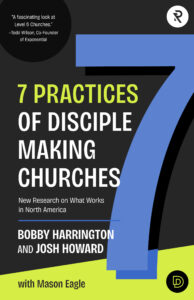
At Life Center Church in Spokane, Washington, Dave Bushnell’s “PBJ” rhythm (Prayer-Bible-Journal) trains people to read Scripture daily, expecting to hear from God, then recording what they heard. Seventy-two percent of his congregation reports their connection with Jesus has deepened through this simple practice.
In the Acts2 Network, Ed Kang’s community reads the same passage every morning, then gathers for breakfast to share what they heard. Throughout the day, conversations naturally turn to Scripture because it’s woven into their shared life.
These churches teach their people that the Bible isn’t a textbook to master—it’s a living Word to obey. And when people encounter God in Scripture and respond in obedience, transformation becomes inevitable.
Getting Started: Building a Foundation of Prayer and Scripture
If your church isn’t currently marked by prayer and deep engagement with Scripture, here’s where to begin:
Step 1: Start with Leaders
Before calling the congregation to prayer, leaders must become people of prayer themselves. Establish a weekly staff and elder prayer gatherings—not to pray through ministry logistics but to seek God’s face.
Brad Daugherty’s team (New Beginnings Church in Longview, TX) asks only one question: “Did the Lord show up?” Let that be your metric too.
Step 2: Create a Simple Rhythm
Don’t launch ten new prayer initiatives. Start with one weekly gathering open to anyone. Make it the same day, same time, every week. Keep it simple: worship, Scripture, prayer for the church and the lost.
Robin Wallar’s church (LIFT Church in Hamilton, Ontario) prays every Tuesday at 6:30 a.m. Consistency matters more than size.
“Keep it simple: worship, Scripture, prayer for the church and the lost.”
Step 3: Integrate Prayer into Your Pathway
New Beginnings made prayer the third step in their discipleship pathway. Where does prayer show up in yours?
Consider making corporate prayer a non-negotiable part of becoming a member or leader. When you elevate prayer in your pathway, you signal it’s essential, not optional.
Step 4: Introduce Seasons of Fasting
Start with an invitation, not a mandate. Invite your congregation into a 3-day, 7-day, or 21-day fast at a strategic time (beginning of the year, before a major decision, during a season of seeking God for breakthrough).
Provide teaching on fasting and offer multiple ways to participate (full fast, partial fast, media fast). The goal isn’t legalism but creating space to seek God.
Robin Wallar’s church fasts so often, it’s woven into their rhythm. They don’t make fasting a burden—they make it a joy.
“Invite your congregation into a 3-day, 7-day, or 21-day fast at a strategic time.”
Step 5: Normalize Discovery of Scripture
Dave Bushnell’s church (Life Center Church) asks every week: “What did you hear from God in Scripture?” Make that question normal in your small groups, leadership meetings, and even Sunday gatherings.
When people expect to hear from God through his Word, they start actually listening.
Train your people to open their Bibles expecting encounter, not just education. Teach them to ask: “What is God saying to me?” and “How will I obey what I heard?”
Prayer and Scripture lay the foundation. They create the soil where transformation takes root. They sustain movements when human energy runs out.
Excerpted from Bobby Harrington & Josh Howard, 7 Practices of Disciple Making Churches.
Start with the whole picture: what disciple making is and how to do it.